
This website uses affiliate links which may earn a commission at no additional cost to you. As an Amazon Associate I earn from qualifying purchases.
When you’re preparing for a thru-hike, your backpack choice shapes every mile you’ll walk. The ULA Ohm sits in an interesting space: it’s designed for hikers who want to go light but not at the expense of essential features and comfort. This guide breaks down what you actually need to know about the Ohm to decide if it’s right for your journey.
Understanding What 31 Ounces Really Means
The Ultra Ohm weighs 31.3 ounces (just under 2 pounds). For context, that’s roughly the weight of a liter of water. This matters because every ounce on your back multiplies over thousands of miles. A pack that weighs 5 pounds versus one that weighs 2 pounds represents a 3-pound difference you’ll carry uphill, downhill, and across every mile of trail.
But weight alone doesn’t tell the whole story. The Ohm uses Challenge Ultra fabric, which combines two different weights: Ultra 400X in high-wear areas like the bottom and corners, and Ultra 200X in lower-stress zones. This strategic approach means you get durability where you need it without carrying extra material where you don’t.
For thru-hikers, this translates to a pack that can handle the grinding reality of months on trail without becoming a burden. You’re not sacrificing longevity for those saved ounces.
Volume: The 63-Liter Reality
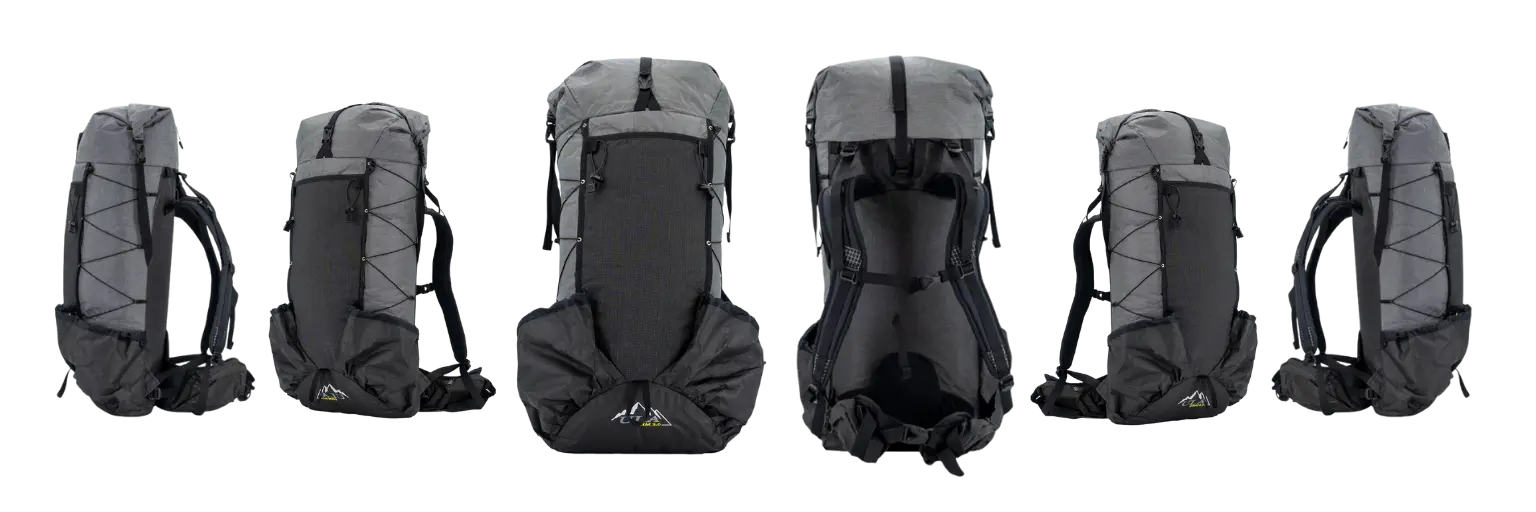
The ULA Ohm offers 63 liters total (3,960 cubic inches), but that number needs context. Here’s how that space actually breaks down:
The main body holds 34.4 liters, which is where your sleeping bag, extra clothes, and food bag live. The extension collar adds another 8.2 liters when you roll it up and cinch it down, giving you flexibility for longer food carries or when you need to pack out bear canister contents.
The front stretch mesh pocket (8.2 liters) becomes your wet gear storage. Rain jacket, tent rainfly, damp clothing all go here where they can dry while you walk and won’t soak everything inside your pack.
Each side pocket holds 6.6 liters. These become your water bottle homes, snack stashes, or phone pockets. The pockets are about 6 inches tall, which means a standard 20-ounce water bottle fits perfectly and stays secure. Taller 32-ounce bottles work but sit higher and can be trickier to reach.
The hipbelt pockets (1.5 liters each) seem small but prove invaluable. Your phone, snacks, lip balm, and sunscreen all stay within reach without stopping or removing your pack.
This distribution of space means you’re not just getting 63 liters, you’re getting organized storage that puts different types of gear in logical places.
How It Carries Weight
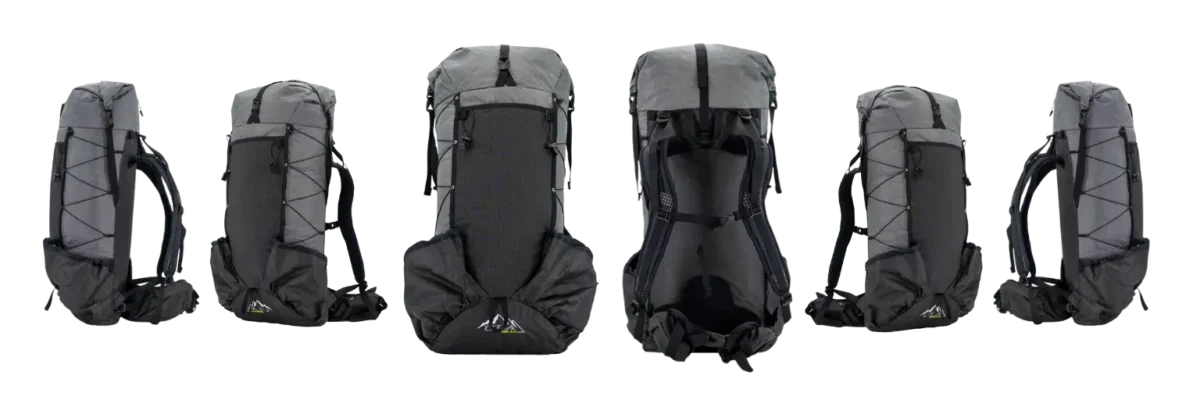
The Ohm uses a carbon fiber and Delrin suspension hoop. Think of this as an upside-down U-shape that connects your shoulders to your hips. Unlike heavier internal frame packs with rigid metal stays, this hoop flexes slightly, moving with your body rather than fighting it.
ULA rates this pack for loads up to 30 pounds. In practical terms, that’s your full pack weight including water and food. For most thru-hikers carrying lightweight gear, this covers a base weight around 10-12 pounds plus several days of food and 2-3 liters of water.
The contoured hipbelt does the heavy work of load transfer. Unlike cheaper packs where shoulder straps bear most weight, the Ohm’s belt wraps your hips and carries the majority of the load. Your shoulders guide and stabilize; your hips do the hauling. This distinction matters on mile 15 of a 20-mile day.
The hipbelt also moves up and down within its sleeve, giving you about an inch of adjustment. This fine-tuning helps you get the pack sitting exactly where it should on your torso.
The Roll-Top System
The Ohm uses a roll-top closure instead of a zippered lid. This design choice affects how you pack and access gear daily.
Here’s how it works: the collar extends above your packed gear. You roll it down on itself three or four times, creating a water-resistant seal, then clip the side buckles to secure everything. This system is borrowed from dry bags used in river running and it genuinely works to keep water out.
The trade-off is access. When you want something from the main compartment, you unbuckle the compression straps, unroll the collar, reach in, then roll and secure everything again. This takes maybe 30 seconds, but it’s 30 seconds each time.
Most hikers adapt by keeping frequently needed items in exterior pockets. Your camp shoes, lunch, and layers all stay accessible in the front mesh or side pockets. The main bag holds your sleeping system, cook kit, and items you only need at camp.
On dry days, you can simply fold the collar forward without rolling it, maintaining quick access while still using the compression straps.
Built to Last
The Ultra 400X and 200X fabrics represent a significant upgrade from standard nylon. Ultra material is 15 times stronger than steel by weight and twice as abrasion-resistant as typical 420-denier nylon. It’s also waterproof to 200 PSI, meaning heavy rain isn’t penetrating this fabric.
For thru-hikers, this durability matters in specific ways. The bottom of your pack takes constant abuse: setting it on rocks, dragging it out of tents, leaning it against trees. The 400X fabric in these zones resists the punctures and tears that end lesser packs.
The fabric also absorbs 80% less moisture than traditional nylon. When you’re hiking in rain, your pack isn’t soaking up water weight or staying damp in your tent at night.
One consideration: the Ultra Ohm does not have bladder hose ports. ULA eliminated these to maximize water resistance, since hose ports create potential entry points for water. You’ll need to rely on water bottles in the side pockets, which most ultralight hikers prefer anyway for easier access and cleaning.
Compression and Load Management
The Variable Compression System addresses a common ultralight pack problem: they work great when stuffed full but become floppy and unbalanced when partially loaded.
The Ohm uses non-stretch cordage running through metal grommets along the pack sides. You can cinch this cord tight regardless of how full the pack is, squeezing everything toward your back and keeping the load stable.
This matters most when you’re between resupply points. On day one with 5 days of food, the pack is tight and stable. On day five with one dinner left, you can compress the pack down to match your reduced volume, preventing gear from shifting around inside.
The compression also helps with load control on steep terrain. A compressed pack moves with you rather than swaying independently, which translates to better balance on technical sections and less energy fighting your pack’s momentum.
External Gear Options
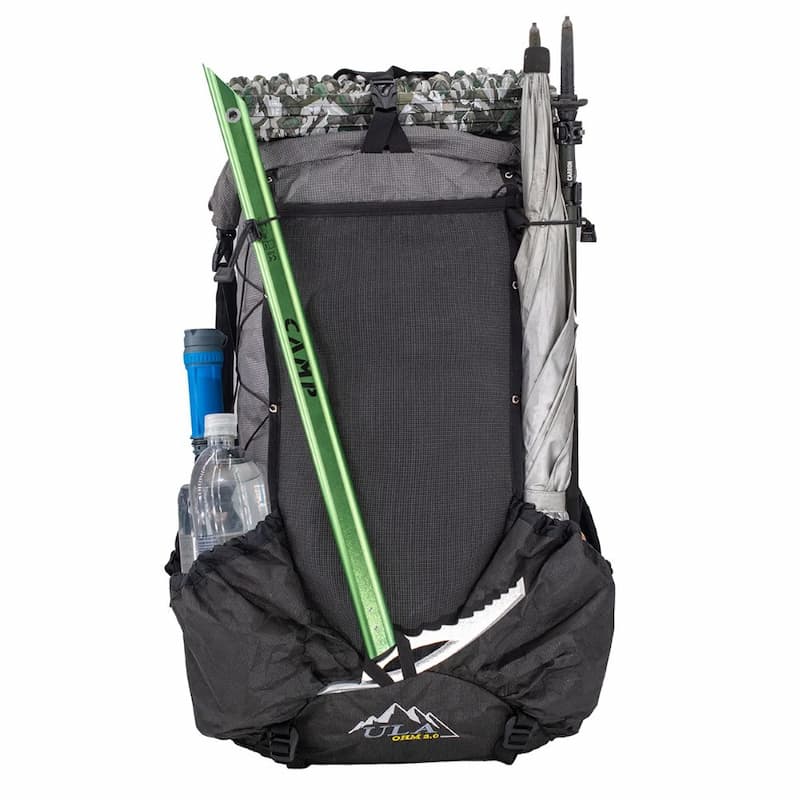
The Ohm after 2024 added low-profile loops on top and bottom for removable strap systems. You can purchase separate top Y-strap kits or bottom strap kits (or both) to carry gear externally.
This modularity matters because your gear needs change. Through the desert, you might strap a full gallon of water to the bottom. In the Sierras, your bear canister might ride on top. You’re not carrying extra straps and attachment points all the time, only when you need them.
The pack also includes combination ice axe and trekking pole loops. These dual-purpose attachment points handle winter gear or your trekking poles during breaks without requiring different equipment.
Getting Things In and Out
The side pockets have elasticized tops angled toward your shoulders, making it possible to grab your water bottle without removing the pack. The stretch mesh gives when you pull the bottle out and grips it back in place when you return it.
Most hikers can reach their bottles with practice, though flexibility and arm length play a role. If you can’t quite reach, a quick shoulder shrug usually brings the bottle within grasp.
The front mesh pocket opens from the top and stretches significantly. Your tent can typically be stuffed in here, along with wet gear or your puffy jacket. The mesh is UltraStretch material, more abrasion-resistant than standard mesh, so it withstands branches and rough handling better than expected.
The hipbelt pockets use waterproof zippers, protecting your phone and essential electronics from rain and sweat. These pockets are sized for modern smartphones plus some small items.
Fit Customization
The ULA Ohm comes in four torso sizes: small (15-18 inches), medium (18-21 inches), large (21-24 inches), and extra-large (24+ inches). You measure from your C7 vertebra (the bump at the base of your neck) down to your iliac crest (top of your hipbones).
Shoulder straps come in two profiles: J-straps (straight) and S-straps (curved). This choice depends on your shoulder slope. People with flatter, squared shoulders typically prefer J-straps for better surface contact. Those with more sloping shoulders usually find S-straps more comfortable.
Hipbelts range from extra-small (26-30 inches) through double extra-large (47+ inches), with detailed sizing based on your waist measurement plus 2-5 inches depending on your build.
Getting these measurements right matters more than with traditional packs because the Ohm relies on proper fit to transfer weight effectively. An incorrectly sized pack won’t carry its rated load comfortably.
Maintenance and Care
The Ultra fabric requires minimal maintenance. You can spot clean it with mild soap and water. The fabric’s low moisture absorption means it dries quickly after washing.
Because the fabric is waterproof to 200 PSI, you don’t need to apply waterproofing treatments. The protection is built into the material structure.
Repairs are straightforward when needed. Small tears or punctures can be patched with tenacious tape or similar repair tape. Larger damage can be sewn, though the Ultra material is tough enough that catastrophic failures are rare if you’re using the pack within its weight limits.
ULA offers tune-ups and repairs as part of their warranty, though many thru-hikers find the pack needs minimal intervention even after thousands of miles.
What the Ohm Does Best
The Ohm excels for fast-moving hikers who have dialed in lightweight systems. If your base weight sits around 10 pounds and you’re comfortable managing food carries under 5 days, this pack provides everything you need without excess.
It particularly suits hikers who value efficiency and speed. The light weight means less effort per mile. The streamlined design means fewer straps and features to fiddle with. You pack it, you walk, you make miles.
The Ohm also works well for experienced hikers transitioning to ultralight systems. The suspension provides enough support that you’re not making a jarring jump from full-featured packs to frameless ultralight options. It’s a bridge that maintains comfort while shedding weight.
What the Ohm Doesn’t Do
This pack is not designed for heavy loads or winter mountaineering. If you regularly carry loads over 30 pounds, need to pack a full winter sleep system, or carry technical climbing gear, you’ll exceed the pack’s comfortable capacity.
The 63-liter volume, while generous for ultralight hiking, can feel constraining if you’re new to minimalist packing. Beginners often carry more gear than necessary, and forcing everything into the Ohm becomes a puzzle.
The roll-top closure, while water-resistant and secure, isn’t ideal if you need frequent access to the main compartment. Photographers or hikers who pack and repack constantly may find zippered top-loaders more convenient.
Making Your Decision
Choose the ULA Ohm if you’re committed to lightweight hiking, your base weight is under 12 pounds, and you value the combination of minimal weight with functional features. It’s built for hikers who have figured out what they truly need and eliminated the rest.
Consider alternatives if you’re still experimenting with gear, regularly carry more than 30 pounds total weight, or want the convenience of a top-loading pack with full-length zipper access.
The Ohm represents a particular philosophy: carry what you need, nothing more, and build your pack around that principle. For hikers who embrace this approach, it delivers thousands of comfortable miles. For those still finding their system, it might feel limiting.
At $360, it’s not an impulse purchase, but for a piece of gear you’ll trust with your comfort across multiple long trails, the investment makes sense. The durability means you’re buying years of service, not a single-season pack.
Your choice ultimately depends on matching the pack’s capabilities to your hiking style, gear weight, and priorities. The Ohm doesn’t try to be everything to everyone. It does one thing exceptionally well: it carries a light, well-organized load over long distances without complaint. Whether that’s what you need is a question only you can answer.