
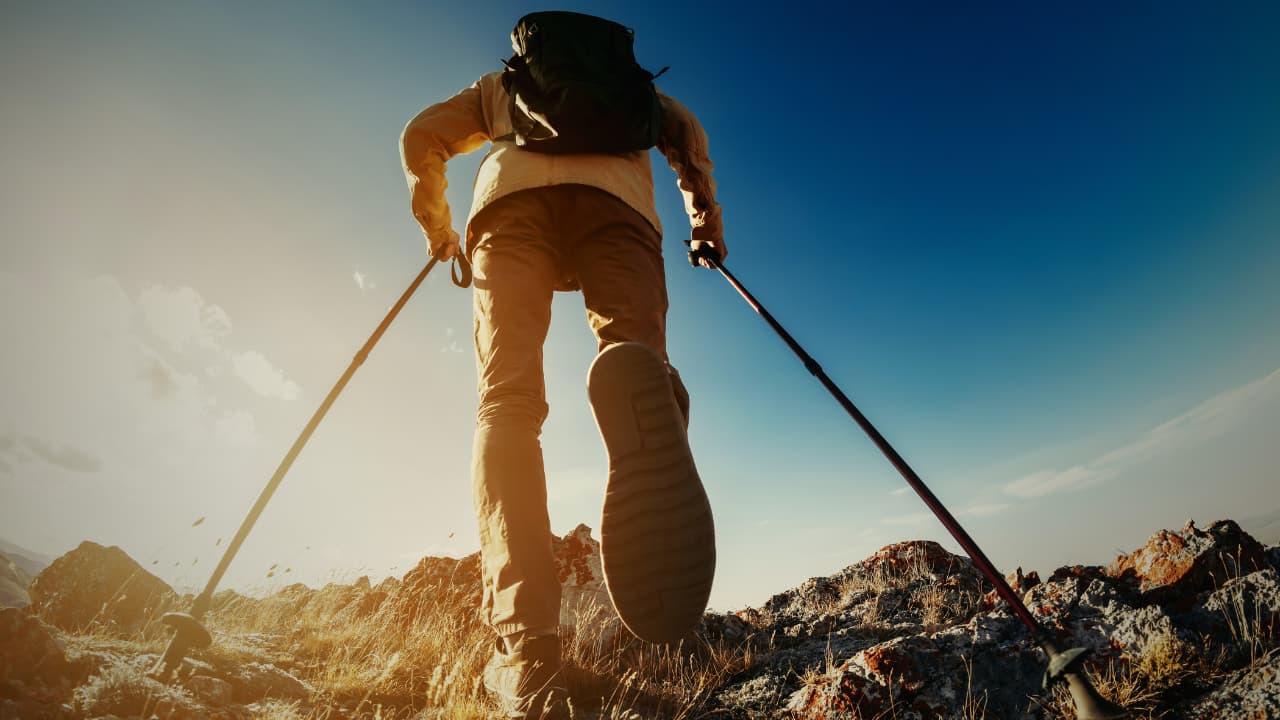
If you’re planning your first thru-hike, you’ve probably noticed something in nearly every trail photo: hikers wielding a pair of poles. But are trekking poles really necessary? What makes them worth carrying for hundreds or thousands of miles? This guide will walk you through everything you need to know about trekking poles before hitting the trail.
What Are Trekking Poles?
Trekking poles are adjustable walking sticks designed specifically for hiking and backpacking. Unlike a single walking stick your grandfather might use, trekking poles come in pairs and feature specialized grips, adjustable lengths, and interchangeable tips. Think of them as extensions of your arms that help distribute your weight and provide stability across varied terrain.
Most poles consist of two or three collapsible sections made from aluminum or carbon fiber, connected by an internal mechanism that allows you to adjust the height. The bottom features a carbide or steel tip for gripping dirt, rock, and ice, while removable rubber or plastic baskets prevent the pole from sinking too deeply into soft ground or snow.
Why Thru-Hikers Use Trekking Poles
The benefits of trekking poles become crystal clear after your first steep descent with a heavy pack. Here’s what they offer:
Reduced Joint Impact: Your knees take a beating on long descents. Trekking poles can reduce the force on your knees by up to 25% by transferring some of your body weight to your arms and poles. Over a 2,000+ mile thru-hike, this difference can mean the distinction between finishing and going home with knee problems.
Improved Balance and Stability: Stream crossings, muddy sections, and uneven terrain become significantly easier with two additional points of contact with the ground. You’ll feel more confident navigating tricky sections, especially when carrying a full pack that shifts your center of gravity.
Enhanced Climbing Power: Trekking poles engage your upper body, particularly your arms and core, turning climbing into a full-body workout. You can push down on the poles to help propel yourself uphill, making steep ascents feel more manageable.
Rhythm and Pacing: Many long-distance hikers find that poles help establish a consistent rhythm, almost like having a metronome for your feet. This steady cadence can make long days feel less exhausting and help you maintain better form when fatigue sets in.
Trail Testing and Spider Web Clearing: Beyond the physical benefits, poles are perfect for testing water depth, poking at suspicious ground, moving vegetation aside, and becoming the designated spider web clearer when you’re hiking first in the morning.
The Shelter Connection: Poles as Structure
Here’s where trekking poles earn their reputation as multi-purpose gear among weight-conscious thru-hikers. Many ultralight shelters, including trekking pole tents and tarps, are designed to use your poles as the primary structural support instead of traditional tent poles.
This setup offers several advantages. First, you eliminate the weight of dedicated tent poles, often saving 8-12 ounces. Second, trekking pole shelters typically pack smaller since you’re not carrying rigid poles. Popular shelters like the Zpacks Duplex, Tarptent Notch, and various flat tarps all rely on your trekking poles to stand upright.
The trade-off? Your poles are now essential equipment, not optional. You can’t set up your shelter without them, and if a pole breaks, you have both a mobility and shelter problem. This is why durability matters when choosing poles if you plan to use them for shelter support.
Types of Trekking Poles
Understanding the different mechanisms will help you choose the right poles for your needs:
Telescoping Poles with Twist Locks: These poles feature sections that slide into each other and lock in place by twisting a collar. They’re generally affordable and reliable, though dirt and grit can occasionally cause the locks to slip. They offer infinite adjustability within their range.
Telescoping Poles with Flick Locks: Instead of twisting, these use an external lever mechanism that clamps down on the inner section. Many hikers prefer flick locks because they’re easier to adjust with gloves, less prone to loosening during use, and simple to fix if they need tightening.
Folding/Collapsible Poles: These poles use a cord running through the interior (similar to tent poles) and fold into short sections connected by metal joints. They’re incredibly compact when folded, making them easy to stash in your pack when not in use. However, they offer no height adjustability, so you must choose the correct size when purchasing.
Materials: Aluminum vs. Carbon Fiber
Aluminum poles are the workhorses of the trekking pole world. They’re durable, relatively inexpensive, and can bend without breaking. If you do damage them, they’re often repairable on trail. The downside? They’re heavier and can fatigue your arms over very long days.
Carbon fiber poles are lighter, stiffer, and transmit less vibration up to your hands. Serious thru-hikers often prefer them because every ounce matters over thousands of miles. However, they’re more expensive and can snap rather than bend when overstressed, particularly when used as tent supports.
For your first thru-hike, either material will serve you well. Budget-conscious beginners often start with aluminum, while those prioritizing weight savings might invest in carbon fiber.
Key Features to Consider
Grip Material: Cork grips conform to your hands, wick moisture, and resist blistering. Foam grips are comfortable and absorb sweat but can deteriorate faster. Rubber grips are durable but can become slippery and cause blisters when wet.
Wrist Straps: Properly used straps allow you to relax your grip and let the strap support your weight on the downstroke, reducing hand fatigue. Look for padded, adjustable straps that won’t chafe during long days.
Weight: Pole weight typically ranges from 7 to 20 ounces per pair. Remember that you’ll be lifting these thousands of times per day, so lighter generally feels better, though not at the expense of necessary durability.
Packed Size: Consider how the poles will attach to your pack when not in use. Folding poles are most compact, while telescoping poles extend further but collapse reasonably small.
Learning to Use Trekking Poles
Using poles effectively requires practice. Your arms should swing naturally, with the opposite pole planting as each foot steps forward. On uphills, shorten your poles slightly and push down forcefully. On descents, lengthen them and plant ahead for stability.
The wrist straps are not just for safety. Slide your hand up through the strap from below, then grip both the strap and handle. This allows you to push down on the strap during your stride without maintaining a death grip on the handle.
Final Thoughts
Trekking poles aren’t mandatory for thru-hiking, but they’ve become standard equipment for good reason. They reduce wear on your body, increase stability, and can eliminate dedicated tent poles from your pack. Most thru-hikers who start without poles eventually acquire them after experiencing challenging terrain or accumulating knee pain.
Whether you choose aluminum or carbon fiber, telescoping or folding, the best poles are the ones you’ll actually use consistently. Start practicing on day hikes before your thru-hike to develop good technique and build the arm strength needed for long days on trail. Your knees will thank you somewhere around mile 500.