
This website uses affiliate links which may earn a commission at no additional cost to you. As an Amazon Associate I earn from qualifying purchases.
When gearing up for a long-distance thru-hike, every ounce matters. Your sleep system is one of the heaviest items in your pack, which is why so many experienced hikers have made the switch from sleeping bags to backpacking quilts.
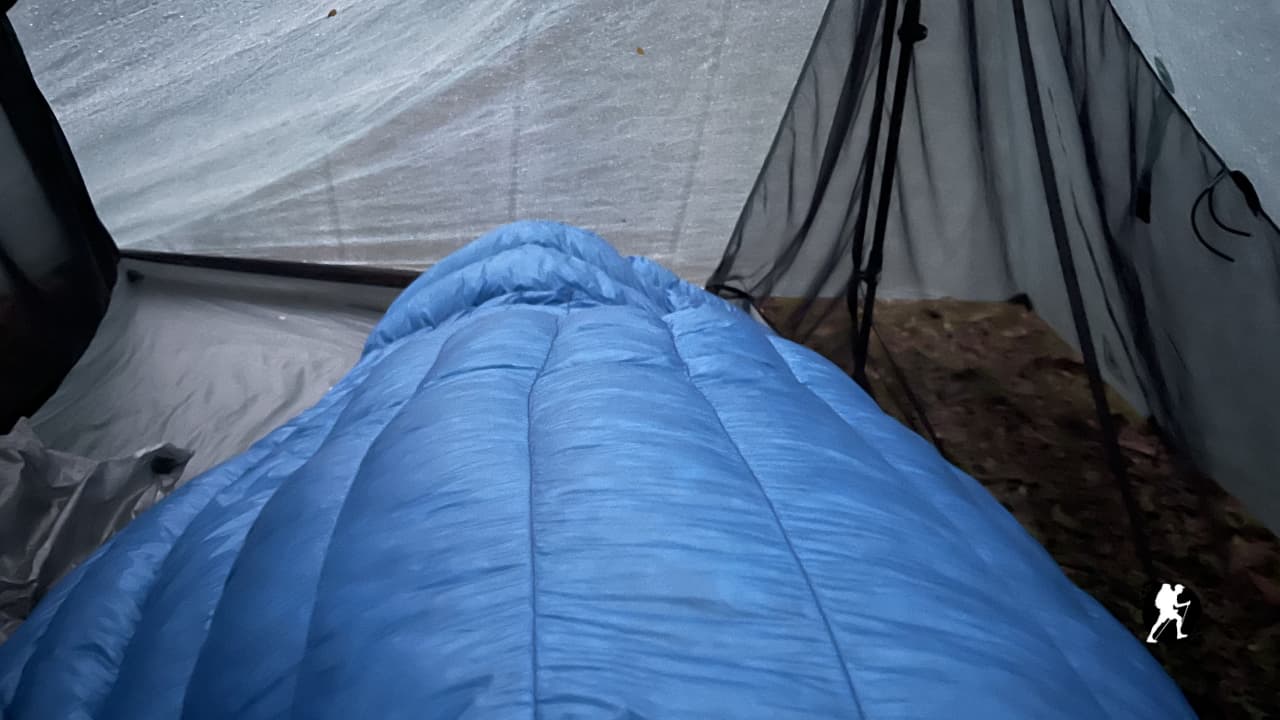
A backpacking quilt is similar to a sleeping bag but removes the hood, zipper, and insulation underneath you. Instead of wasting down and fabric on material that gets compressed flat under your body, a quilt maximizes insulation where it matters most: on top.
This guide covers everything you need to know about backpacking quilts for thru-hiking, from how they work to which models will serve you best on the trail.
What Makes Quilts Different From Sleeping Bags
The core difference between a backpacking quilt and a sleeping bag comes down to two design changes: removing the zipper and hood, and eliminating the bottom fabric and insulation.
These changes dramatically reduce weight while maintaining warmth. Here’s why: down and synthetic insulation only work when they can loft and trap air. When you lie on a sleeping bag, your body weight compresses the insulation underneath you flat, making it essentially worthless. A quilt recognizes this reality and redirects that insulation to the top where it actually provides warmth.
Most quilts range from 15 to 25 ounces, compared to 25 to 35 ounces for similar sleeping bags. That 10-ounce difference might not sound like much, but over six months and thousands of miles, it adds up.
How Backpacking Quilts Keep You Warm
Quilts work by creating a thermal barrier above your body while your sleeping pad handles insulation from below. The quilt traps warm air close to your skin and prevents heat loss to cold air above you.
However, your quilt is only half of your sleep system. The sleeping pad you choose is equally critical as this is a system for warmth. Without adequate pad insulation, you’ll lose heat to the ground no matter how warm your quilt is rated.
Understanding R-Value and Temperature Ratings
Your sleeping pad’s R-value measures its resistance to heat transfer. The higher the R-value, the better it insulates you from cold ground.
Here’s what you need for different conditions:
- Summer (50°F+): R-value 1-2
- Three-season (20-50°F): R-value 3-4
- Winter (below 20°F): R-value 5+
Most thru-hikers underestimate pad insulation and blame their quilt when they’re cold. If you’re using a 20-degree quilt in 25-degree weather but only have an R-2 pad, you’ll freeze. For a 20-degree quilt to perform at its rating, you need at least an R-4 pad.
Setting Up Your Quilt System
Since quilts don’t wrap around you like sleeping bags, they use attachment systems to stay connected to your sleeping pad. Most quilts include straps or shock cords that loop around your pad to prevent drafts and keep you centered.
Some manufacturers include attachment systems standard, while others offer them as add-ons. Check the specifications before purchasing if this feature matters to you.
Why Thru-Hikers Choose Quilts Over Sleeping Bags
After years of using a mummy bag, I switched to a quilt and haven’t looked back. Here’s why quilts have become the overwhelming choice for long-distance hikers.
Weight Savings That Matter
A quality 20-degree quilt, like the HMG 20 Degree Quilt, will weigh in around 18-22 ounces, while a comparable sleeping bag weighs 26-32 ounces. That 8-12 ounce difference means you can carry less food weight, move to a lighter backpack, or simply finish each day with less fatigue.
If you’re worried about your head being cold without a hood, a simple beanie solves the problem. Most hikers already carry one anyway.
Smaller Pack Volume
Without the zipper, hood, and extra fabric, quilts compress significantly smaller than sleeping bags. This allows you to downsize your backpack and reduce your overall base weight even further.
Unrestricted Movement for Better Sleep
This benefit sold me completely. As someone who shifts from shoulder to shoulder throughout the night, sleeping bags felt restrictive. I’d wake up partially when trying to roll over, disrupting my sleep cycle.
With a quilt, I move naturally just like sleeping in a regular bed at home. The difference in sleep quality over months on trail is substantial.
Temperature Flexibility
Hot nights become bearable when you can crack open a quilt like a blanket or drape just your legs. Sleeping bags trap heat even when partially unzipped, but quilts adjust instantly to changing conditions.
Reduced Moisture Issues
When you breathe into a sleeping bag hood, that moisture condenses inside your insulation. Over time, this reduces loft and warmth. Quilts keep your head exposed, eliminating this problem entirely.
Lower Cost
Quilts typically cost $50-100 less than sleeping bags with similar temperature ratings and fill power. Fewer materials and simpler construction translate to savings you can spend elsewhere in your gear system.
Designed for Pad Integration
Sleeping bags treat pads as an afterthought. Quilts are purpose-built to work with your pad as an integrated system, maximizing the warmth you get from both components.
Better Durability
Zippers represent the most common failure point in sleeping bags. They snag, separate, and break. Quilts eliminate this vulnerability entirely.
Superior Breathability
After a hard day of hiking, your body temperature gradually decreases as you settle into camp. Quilts breathe better than sleeping bags, allowing moisture to escape instead of trapping it against your skin. This becomes critical in humid conditions where damp insulation can be dangerous.
When Sleeping Bags Still Make Sense
Quilts excel for three-season thru-hiking, but they’re not perfect for everyone.
Cold weather camping below 15°F benefits from the sealed warmth of a mummy bag with hood. Backcountry winter camping, high-altitude mountaineering, or arctic conditions warrant traditional sleeping bags.
Back sleepers who don’t move much may not appreciate the freedom of movement that makes quilts so appealing to side sleepers and restless sleepers.
If you primarily camp in extreme winter conditions, stick with a sleeping bag. For everything else, give quilts serious consideration.
Top Backpacking Quilts for Thru-Hiking
These quilts have proven themselves on long-distance trails year after year. Each one offers the quality construction needed to survive thousands of miles of use.
Best Overall: Enlightened Equipment Revelation 20
The EE Revelation has dominated thru-hiking for good reason. According to surveys of Appalachian Trail thru-hikers, the Revelation has been the most popular quilt choice for four consecutive years.
Founded by Tim Marshall in 2007, Enlightened Equipment started as a one-person basement operation and has grown to over 50 employees in a 50,000-square-foot facility in Winona, Minnesota. They’ve maintained quality while scaling up.
The Revelation offers exceptional customization. Choose from 850 or 950 fill power down, multiple temperature ratings, custom colors, and various width options. The footbox features a 20-inch zipper plus shock cord for heat retention or ventilation.
Benefits: Extensive customization, 850 or 950 fill power options, proven durability, American-made
Drawbacks: Lead times of 4-8 weeks for custom orders
Runner-Up: UGQ Bandit
The UGQ Bandit represents a hybrid approach, combining features from their previous Flight Jacket with innovations from their Renegade line.
The Bandit’s isolated chamber design on the torso and footbox places insulation strategically where you need it most. The silky soft nylon interior feels luxurious after a long hiking day.
Benefits: Excellent build quality, outstanding warmth-to-weight ratio, comfortable interior fabric
Drawbacks: Lead time required, regular width too narrow for side sleepers (size up)
Honorable Mention: Zpacks Solo Quilt
Zpacks builds ultralight gear that doesn’t compromise on quality. Their Solo Quilt uses 900 fill power DownTek water-resistant goose down with vertical baffles and 30% overstuffing in each compartment.
Many hikers who choose a Zpacks Duplex tent and Arc Blast backpack complete their system with the Solo Quilt for cohesive ultralight performance.
Benefits: Exceptionally light weight, water-resistant 900-fill down, overstuffed baffles
Drawbacks: Premium price, limited customization compared to cottage brands
Honorable Mention: Katabatic Flex 22
Katabatic Gear created the Flex series because they were unsatisfied with existing ultralight options. Their solution addresses many concerns hikers have when switching from bags to quilts.
The Flex features a zippered footbox that opens completely flat for warm nights or closes snugly for cold conditions. This versatility makes it ideal for hikers facing varied climates.
Benefits: Exceptional stitching quality, American-made craftsmanship, versatile footbox design
Drawbacks: Lead time of 3-6 weeks, regular width too narrow for side sleepers (size up)
Making Your Decision
Backpacking quilts have become the standard for thru-hikers because they deliver real advantages: lighter weight, better compression, greater comfort, and lower cost compared to sleeping bags with similar warmth ratings.
The adjustment period is real. You’ll need to learn proper setup and get comfortable with the open design. But most hikers adapt within a few nights and wonder why they didn’t switch sooner.
If you’re planning a long-distance trail and currently using a traditional mummy bag, seriously consider making the switch. The weight savings alone justifies the change, and the improved sleep quality makes a substantial difference over months on trail.
Your sleep system directly impacts your ability to recover, stay healthy, and enjoy the journey. Choose wisely, test your system before your hike, and get ready for better nights under the stars.