
This website uses affiliate links which may earn a commission at no additional cost to you. As an Amazon Associate I earn from qualifying purchases.
When you’re planning a thru-hike, your sleep system becomes one of the most critical decisions you’ll make. You’ll be using it every single night for months, and every ounce you carry matters over those thousands of miles. The Zpacks Solo Quilt represents a popular choice among experienced thru-hikers, but understanding why requires looking beyond the spec sheet.
Understanding the Weight Advantage
Let’s start with what matters most on a long-distance trail: carried weight. The Solo Quilt’s lightest configuration (30°F in Slim-Short) weighs just 11.8 ounces. To put that in perspective, many traditional sleeping bags weigh between 2 to 3 pounds. Even if you select a warmer 20°F rating in a Standard-Medium size, you’re looking at 18.3 ounces. That’s roughly half the weight of comparable traditional bags.
This weight savings compounds over every mile. When you’re climbing mountain passes, fording rivers, or simply trudging through your twentieth mile of the day, those saved ounces translate to real energy conservation. The quilt achieves this weight reduction primarily by eliminating the insulated bottom (since compressed insulation underneath you provides minimal warmth anyway) and using 900-fill power Muscovy Duck down, which provides exceptional loft per ounce.
The actual weight you’ll carry includes the provided roll-top dry bag (adds approximately 0.9 ounces), so factor that into your calculations. Most thru-hikers find this slight addition worthwhile since the dry bag protects your investment and doubles as compression storage.
Temperature Ratings Decoded
The Solo Quilt comes in three temperature ratings: 30°F, 20°F, and 10°F. Here’s what you actually need to know about choosing the right one.
Zpacks estimates these ratings correspond to the ISO “Transition Range”, which means you’ll be comfortable but not toasty warm at these temperatures. If you sleep cold, consider sizing down one temperature rating. If you run hot, you might comfortably use a 30°F quilt into the mid-20s.
For summer thru-hikes like the Pacific Crest Trail or Continental Divide Trail, the 30°F version handles the majority of conditions beautifully. The weight difference between temperature ratings is significant (the 20°F version adds roughly 5-6 ounces over the 30°F in the same size), so don’t overestimate your needs.
Winter hiking or shoulder-season attempts on trails like the Appalachian Trail in April might require the 10°F version, but understand you’re now carrying 20+ ounces. Many thru-hikers instead pair a 20°F quilt with warmer clothing layers for occasional cold nights.
Sizing Your Quilt Correctly
Getting the right size matters enormously for both warmth and weight efficiency. Zpacks offers three width categories (Slim, Standard, Broad) and three lengths (Short, Medium, Long).
The width measurement refers to your shoulder and hip dimensions. Measure yourself or reference the size chart carefully. A too-narrow quilt creates drafts; a too-wide quilt carries unnecessary weight. Most average-build hikers find the Standard width appropriate.
For length, you’re looking at actual quilt length versus your height. The Short (68 inches) fits hikers up to 5’6″, Medium (74 inches) up to 6’0″, and Long (80 inches) up to 6’6″. Remember, this quilt has no hood, so you’ll wear a beanie at night. This design choice saves weight and eliminates the claustrophobic feeling some people experience with hooded bags.
The Quilt Design Philosophy
Traditional sleeping bags surround you completely with a zipper running the length. Quilts like the Solo take a different approach that feels strange initially but offers compelling advantages once you understand the system.
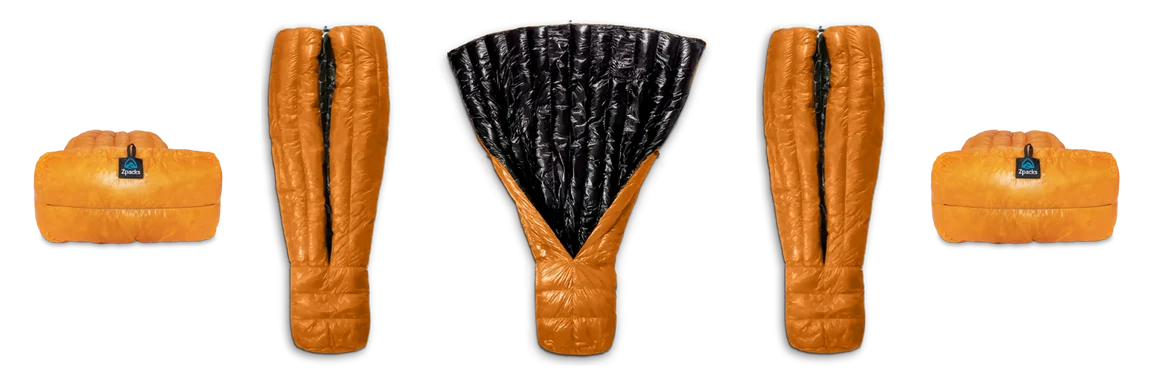
The Solo Quilt features an open back design (no insulation on the bottom) that drapes over you and tucks under your sides. A center snap helps secure the sides underneath you, and an included pad attachment strap connects the quilt to your sleeping pad. This system prevents the quilt from sliding off during the night while allowing you to move naturally.
At the top, a neck cinch cord seals out drafts around your shoulders and neck. Another snap at the top can fully close the quilt for colder nights. The rectangular foot box provides room for your feet to move naturally, whether you sleep on your back, side, or stomach.
This design means you’re sleeping on your pad, under your quilt, rather than inside a sleeping bag. Your pad provides the insulation beneath you, while the quilt handles everything above. This division of labor optimizes the insulation-to-weight ratio.
Setup and Learning Curve
Here’s honest talk: quilts have a learning curve. Your first few nights might involve some fumbling with the attachment system and dealing with drafts you didn’t expect. By night five or six, the system becomes second nature.
Setup takes about 30 seconds once you understand it. Lay your sleeping pad, place the quilt over it, clip the pad strap (threading it through your pad’s attachment points if available), arrange the quilt over yourself, tuck the sides under your body, and cinch the neck cord. Done.
The pad strap is your friend. Some minimalist hikers skip it to save 0.2 ounces, but most find that keeping the quilt centered on the pad throughout the night is worth the negligible weight. If you toss and turn frequently, definitely use the strap.
Cold sleepers or restless movers sometimes add a second strap (purchased separately for $9.95) at the footbox for additional security. This prevents the quilt from riding up and exposing your feet during active sleep.
Packed Size and Compression
The Solo Quilt packs impressively small. The 30°F version in Standard-Medium fits into a stuff sack measuring approximately 5 inches by 12 inches. The warmer 20°F version increases to about 6 inches by 12 inches, and the 10°F jumps to 7 inches by 13 inches.
These measurements reflect the included dry bag’s size, which provides a comfortable fit without excessive compression. You can compress further if needed (many hikers use their quilt as a compression pillow during the day), but understand that repeatedly over-compressing down reduces its long-term loft.
The dry bag features a roll-top closure that creates a waterproof seal. Inside your pack, the quilt typically occupies the bottom section, with many hikers stuffing clothing and other soft items around it to maximize space efficiency. The bag’s cylindrical shape generally fits well in most backpack configurations.
One practical advantage: unlike some ultralight quilts that require patient stuffing into tiny sacks, the Solo Quilt stuffs easily. At the end of a long day when you’re tired and potentially dealing with rain, this ease matters more than you might expect.
Performance in Real Conditions
The 900-fill power down provides exceptional warmth-to-weight ratio but comes with the standard down caveats. In dry conditions, the Solo Quilt performs beautifully, creating a comfortable sleeping environment with efficient temperature regulation. The down lofts impressively and feels soft against your skin through the Ventum ripstop nylon shell and liner.
In wet conditions, down loses insulating properties faster than synthetic alternatives. The shell and liner feature a PFAS-free water repellent treatment that helps resist light moisture and body humidity, but this isn’t a solution for prolonged wet exposure. If you’re hiking in consistently wet environments (looking at you, Washington Cascades and New Zealand’s South Island), you’ll need a solid moisture management strategy.
The quilt’s vertical baffles on the upper body prevent down from shifting to the sides when you sleep on your back. The tightly spaced compartments throughout minimize cold spots. Zpacks overstuffs each compartment with 30% more down than technically necessary, accounting for the inevitable slight compression that occurs over time.
Each quilt includes no sewn-through seams where the shell and liner connect directly. Instead, the baffles maintain separation, eliminating thermal bridges. This construction detail meaningfully improves warmth but costs slightly more in manufacturing complexity.
The rectangular foot box deserves specific mention. Unlike tapered mummy-style designs, this roomier foot area accommodates various sleeping positions without constriction. Side sleepers particularly appreciate the freedom to adjust their feet naturally without feeling confined.
Maintenance and Longevity
Down requires more careful maintenance than synthetic insulation, but proper care extends the quilt’s lifespan significantly. Never store your quilt compressed for extended periods. The included dry bag works for trail use, but at home, transfer your quilt to the separately available storage sack (a large, breathable cotton bag that costs $14.95).
Washing should happen infrequently, only when the quilt becomes genuinely dirty or loses noticeable loft. Use specialized down wash like Granger’s Down Wash in a front-loading washing machine (top-loaders with agitators can damage the baffles). Air dry or use very low heat in a dryer with clean tennis balls to restore loft. Never dry clean.
The quilt’s Ventum ripstop nylon resists tears reasonably well, but remain conscious of sharp objects, campfire sparks, and abrasive surfaces. The material’s 0.51 oz/sqyd weight represents a careful balance between durability and ultralight construction.
Zpacks provides a two-year warranty against manufacturing defects. Beyond that period, they offer repair services for reasonable fees. Most thru-hikers report the Solo Quilt lasting through multiple long-distance hikes with appropriate care.
Practical Considerations for Long Trails
Several factors specific to thru-hiking deserve attention. First, the quilt’s temperature rating matters differently across a 2,000+ mile trail than on weekend trips. You’ll experience diverse weather, and your quilt needs to handle the range. Many PCT hikers successfully complete the trail with just a 30°F quilt, adding clothing layers for colder sections.
Sleep system compatibility matters enormously. Your sleeping pad’s R-value (insulation rating) directly affects your quilt’s performance since you’re sleeping on the pad. A high-quality insulated pad like the Nemo Tensor (R-value 5.4) or Therm-a-Rest XLite (R-value 4.2) pairs well with the Solo Quilt. Budget pads with low R-values will leave you cold regardless of your quilt’s rating.
The quilt’s open design allows excellent temperature regulation. On warmer nights, simply loosen the neck cinch and let one leg out. You can adjust warmth levels far more easily than with a fully enclosed sleeping bag. This adaptability proves valuable when conditions vary dramatically.
Resupply flexibility exists since the quilt doesn’t require special treatment. You can mail it ahead to yourself, carry it continuously, or even temporarily switch to a different sleep system if needed. Its relatively compact packed size fits in most bounce boxes without consuming excessive space.
Color and Personalization
The Solo Quilt comes in four color combinations: Orange Shell/Black Liner, Azure Blue Shell/Navy Blue Liner, Black Shell/Orange Liner, and Navy Blue Shell/Azure Blue Liner. Choose based on personal preference, though lighter colors show dirt more readily.
Notably, all-black quilts sometimes receive a $30 discount when specific sizes remain in stock. If you’re flexible on color and these align with your size needs, the savings represent real value.
The Bottom Line for Beginners
The Zpacks Solo Quilt isn’t the absolute lightest quilt available, nor the least expensive, nor the warmest for its weight. What it offers is a well-executed, reliable design that thousands of thru-hikers have successfully used on major trails worldwide.
For beginners, this matters significantly. You’re buying proven performance with substantial company support, detailed sizing options, quality materials, and a straightforward design without gimmicks. The learning curve exists but isn’t steep. The weight savings are real and meaningful. The packed size won’t dominate your pack.
Consider this quilt seriously if you’re committed to reducing pack weight while maintaining sleep comfort, hiking primarily in dry to moderately wet conditions, willing to invest in a quality insulated sleeping pad, and prepared to learn the quilt sleeping system that has become standard among ultralight thru-hikers.
Skip this quilt if you strongly prefer the security of enclosed sleeping bags, hike primarily in consistently wet environments where synthetic insulation makes more sense, need the absolute warmest option regardless of weight, or want the least expensive entry into quilt sleeping systems (several cottage manufacturers offer lower-priced options with tradeoffs in materials or construction).
Final Thoughts
Gear selection for a thru-hike involves balancing competing priorities: weight, durability, cost, comfort, and performance. The Solo Quilt represents a considered compromise that leans toward lightweight performance while maintaining adequate durability and comfort for long-distance use.
Your sleep system affects every single day on trail. Poor sleep accumulates into fatigue, reduced enjoyment, and potentially dangerous decision-making. Investing in quality sleep gear makes sense, and at $419, the Solo Quilt sits in the mid-to-upper price range for ultralight quilts. You’re paying for American manufacturing, premium materials, and a proven design.
Ultimately, the “right” quilt depends on your specific needs, body type, sleep style, and hiking plans. The Zpacks Solo Quilt serves as an excellent benchmark against which to evaluate other options, and for many thru-hikers, it simply becomes the quilt they trust night after night, mile after mile, from Georgia to Maine or Mexico to Canada.