
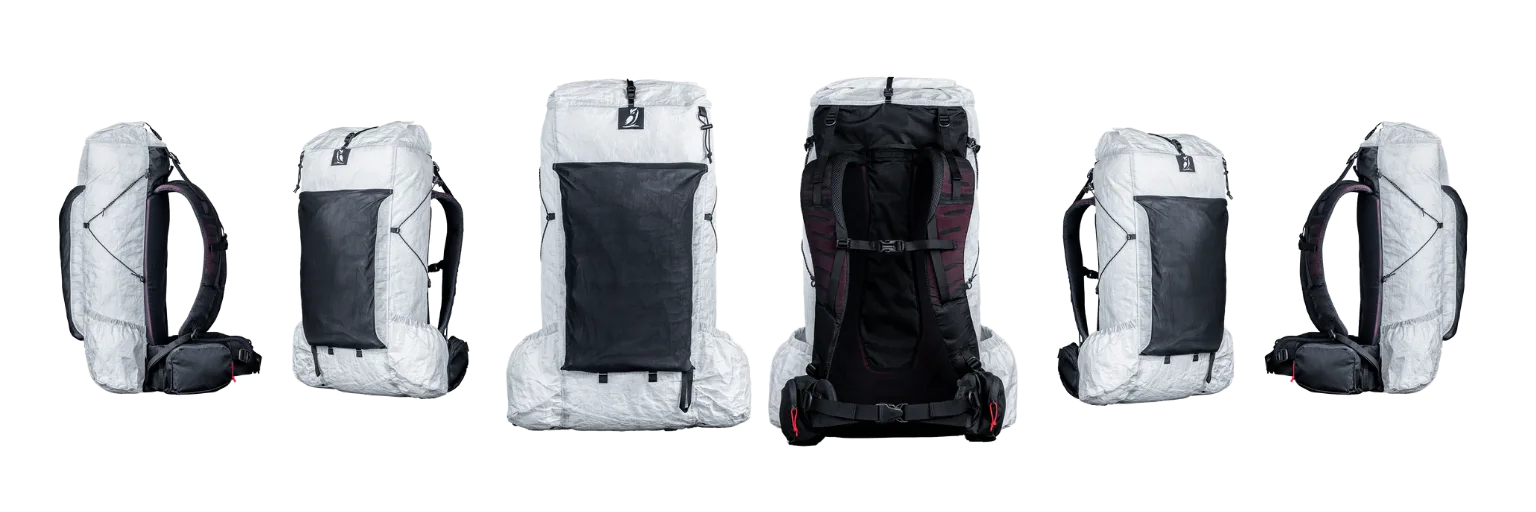
When you’re planning a thru-hike, your backpack choice affects every single mile. You need something that carries your gear comfortably, holds up to abuse, and doesn’t leave you with dead shoulders by lunch. The Outdoor Vitals CS40 Ultra sits in an interesting middle ground between ultralight frameless packs and traditional heavy haulers. Here’s what you actually need to know.
The Frame Situation
The CS40 has a stout high-performance frame. This matters more than you might think.
Most ultralight packs skip the frame entirely to save weight. That works great if you’re carrying 15 pounds total, but add a bear canister, five days of food, and winter gear, and frameless packs start digging into your back and shoulders. You end up exhausted not from the miles, but from fighting your pack.
The CS40 uses carbon fiber stays that weigh just 2 ounces. These stays run tall enough to create proper load lifter angles, which is the key to transferring weight from your shoulders to your hips. Short frames (common on ultralight packs) can’t create these angles, so they fail at the one job a frame is supposed to do.
The frame is also removable. This means you can take it out for airline carry-on dimensions or pull it if you’re doing an ultralight summer trip where you genuinely don’t need it.
Capacity: 40 Liters in the Real World
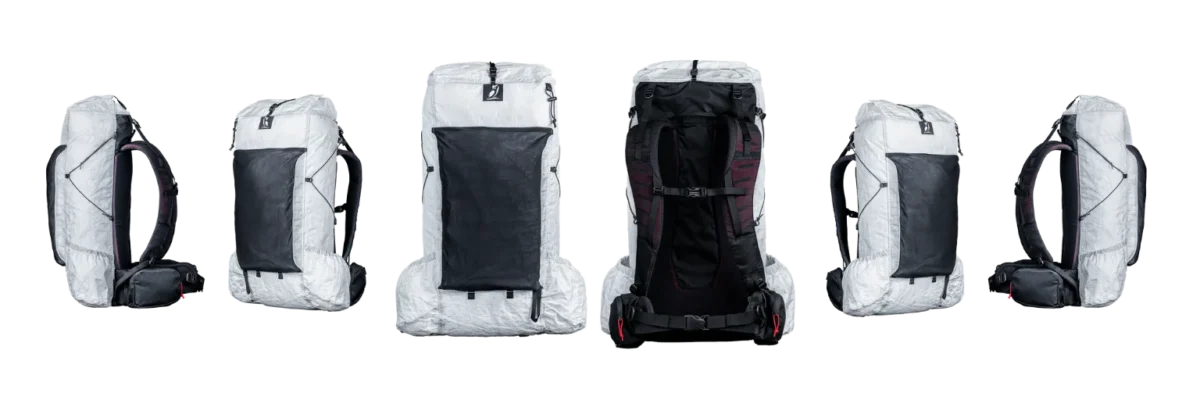
40 liters is the stated capacity, but that number only tells part of the story. What matters is how you can actually use that space.
The main compartment uses a roll-top closure, which gives you flexibility. Carry less gear and roll it down tight. Pack it full and you can extend the closure higher. This beats a fixed zipper compartment where you’re stuck with whatever volume the manufacturer decided on.
External storage includes a large stretch mesh front pocket (perfect for a rain jacket, tent body, or wet gear), side water bottle pockets that you can actually reach while wearing the pack, and two substantial hip belt pockets. The hip belt pockets are big enough for snacks, a phone, and small items you need constantly. One reviewer specifically mentioned fitting a Lenny and Larry’s cookie, which gives you a sense of scale.
For reference, people are comfortably fitting:
- Bear canisters (BV450/BV500 size)
- Ice axes and microspikes
- 8 days of food
- Standard thru-hiking gear (quilt, shelter, cook system, clothes)
The pack compresses well when you’re carrying less, and the roll-top lets you cinch everything down so gear doesn’t shift around inside.
Weight and Carrying Capacity
The pack itself weighs in the ultralight category without being so minimal that it sacrifices function. The exact weight varies by size, but you’re looking at a pack that won’t dominate your base weight.
More importantly, the comfort range extends higher than most ultralight packs. Hikers report carrying comfortably with total pack weights (including food and water) of 25 to 30 pounds. That’s the realistic range for thru-hiking when you account for resupply carries, water in dry sections, or shoulder season gear.
This is where the frame pays off. You’re not constantly adjusting straps or feeling pressure points. The weight transfers to your hips the way it’s supposed to, and the shoulder straps don’t dig in even on long days.
Durability: UltraWeave Fabric
The OV CS40 uses UltraWeave 200, which is Outdoor Vitals’ proprietary fabric. It’s a hybrid construction: UHMWPE (ultra-high-molecular-weight polyethylene) and high-tenacity polyester, woven together and laminated to recycled Challenge film.
In practical terms, this means:
- 6X more abrasion resistant than DCF 150 (Dyneema Composite Fabric, the common ultralight standard)
- 2X stronger in tear resistance and tensile strength
- More flexible and less crinkly than DCF
One thru-hiker used their CS40 for 3,500 miles over two years, including two shorter thru-hikes and half the PCT. The only damage was holes in the back pocket from crawling under blowdowns. The rest of the pack stayed intact. That’s legitimate durability for ultralight fabric.
The trade-off is that ultralight fabrics of any kind require more care than traditional nylon. You can’t drag it across granite or throw it around carelessly. But if you treat it reasonably, the UltraWeave holds up to actual long-distance use.
Comfort System Breakdown
Hip belt: The belt uses slotted EVA foam with anatomical cutouts. This isn’t marketing fluff. The slots let the foam wrap around your hips without creating pressure points. The belt cinches tight enough to actually carry load, and the sewn-in pockets are accessible without contorting yourself.
Shoulder straps: Also use slotted foam padding. The straps are spaced properly at the neck so they don’t pinch or cause the hot spots that plague some ultralight designs. Multiple hikers specifically noted the shoulder strap spacing as better than Gossamer Gear and Hyperlite Mountain Gear packs.
Back panel: Slotted foam again, which creates some airflow channels. You’ll still sweat (it’s backpacking), but the design prevents the solid foam contact that turns your back into a swamp.
Load lifters: Actually functional, not decorative. They connect high enough on the frame to pull the pack’s top toward your body. This keeps the weight stable and prevents the pack from pulling backward, especially when it’s loaded heavy.
Using the Pack Day to Day
Water bottle access matters on trail. The CS40’s side pockets are positioned and sized so you can reach bottles while walking. Not all “accessible” side pockets actually work in practice, but these do according to multiple user reports.
Hip belt pockets get constant use. You’ll put your phone, snacks, chapstick, and sunscreen in there. They’re big enough to be useful but not so large that items bounce around.
Roll-top closure takes a bit of practice if you’re used to zippers. The technique is: load the pack, roll the top down 3 to 4 times, then buckle the straps. It stays weather-resistant (not waterproof), and you can adjust the number of rolls based on how full the pack is.
Loading from the top means you need to think about what you’ll need to access during the day. Put your camp stuff at the bottom, lunch and layers where you can reach them. If you’re used to front-loading panel packs, this requires a mental shift.
Sizing Matters More Than You Think
Torso length is the critical measurement, not your height. The pack comes in Small, Medium, and Large torso sizes. Outdoor Vitals provides a detailed sizing chart based on height and inseam, which works better than trying to measure your own torso.
Hip belt sizing is separate and equally important. The belt needs to sit on your hip bones (your iliac crest), not your waist. Measure your “high hip” just below your belly button, across your hip bones. The CS40 offers five hip belt sizes from Extra Small to Extra Large.
Important note: The CS40 hip belt sizing is different from Outdoor Vitals’ Shadowlight pack. If you’re switching between models, remeasure and check the specific size chart.
If you’re between sizes, customer service can help you figure out whether to size up or down based on your preferences for where the pack sits on your body.
Maintenance and Longevity
Cleaning ultralight fabric is straightforward but not aggressive. Hand wash with mild soap and lukewarm water. Don’t use a washing machine (the agitation is too harsh) or hot water (can affect the laminate). Let it air dry completely before storing.
Repairs are inevitable on long trails. Small holes can be patched with repair tape (Tenacious Tape works well). Larger tears might need sewing with a lightweight thread and then a tape patch over the repair for reinforcement. The UltraWeave fabric is easier to repair than some ultralight materials because it has a woven component, not just laminated layers.
Storage: Keep it somewhere dry and out of direct sunlight when you’re not using it. UV exposure degrades all technical fabrics over time.
Who This Pack Is For
The CS40 Ultra makes sense if you:
- Need to carry 20 to 30 pounds comfortably for extended periods
- Want ultralight-adjacent weight without going fully minimalist
- Are doing thru-hikes where you’ll carry bear canisters or shoulder season gear
- Have had shoulder and back pain with frameless packs
- Want a pack that can handle multiple seasons and trip types
It’s less ideal if you:
- Are committed to sub-10-pound base weights and don’t need frame support
- Prefer front-loading panel access over top-loading
- Need maximum durability over weight savings (traditional nylon packs still win here)
- Want built-in pack brain compartments or lots of external lash points
The Bottom Line
The OV CS40 Ultra solves a specific problem: it carries real loads comfortably at a weight that doesn’t wreck your base weight. The carbon fiber frame and proper load lifter geometry make it work like a technical mountaineering pack scaled down to thru-hiking weight. The UltraWeave fabric holds up to long-distance abuse better than you’d expect for its weight class.
At $329.97 ($296.97 with membership), it’s priced in the middle of the ultralight pack market. That’s less than Hyperlite Mountain Gear or Zpacks, comparable to Gossamer Gear, and more than budget options.
For most thru-hikers, this pack hits a practical sweet spot. It’s light enough that you’re not hauling extra ounces for no reason, but supportive enough that you’ll still be comfortable at the end of 20-mile days when your pack is heavy with water and food. That’s the balance that actually matters on trail.