
This website uses affiliate links which may earn a commission at no additional cost to you. As an Amazon Associate I earn from qualifying purchases.
If you’re planning a thru-hike that touches spring, fall, or high-elevation terrain, you’ve probably heard experienced hikers mention Microspikes. For someone new to long-distance hiking, the idea of adding yet another piece of gear to your pack might seem overwhelming. But understanding traction devices can literally be the difference between a safe hiking day and a dangerous fall.
Let’s break down everything you need to know about Microspikes so you can make an informed decision about whether they belong in your pack.
What Are Microspikes?
Microspikes are a brand name (made by Kahtoola) that has become synonymous with lightweight traction devices, much like Kleenex for tissues. Technically, we’re talking about a category of gear: crampon-style traction devices that attach to your hiking shoes or boots.
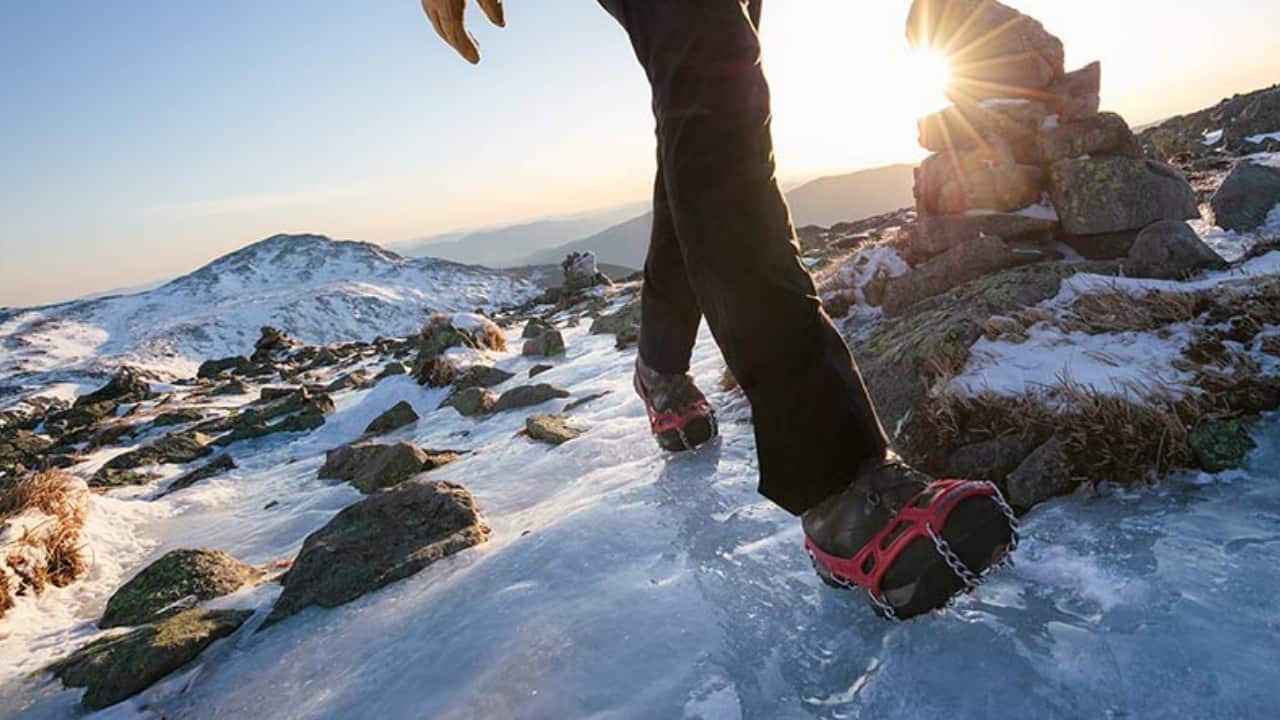
These devices feature a rubber harness that stretches over your footwear, with a series of metal spikes (usually 10-12 per foot) protruding from the bottom. The spikes are typically 3/8 to 1/2 inch long, made from heat-treated stainless steel, and arranged in a chain-link pattern across the sole.
Think of them as aggressive snow chains for your feet.
Why Thru-Hikers Carry Microspikes
Hard-packed snow and ice are the primary enemies of hiking traction. While fresh, soft snow can usually be navigated with regular trail shoes, conditions change quickly in the mountains. Morning shadows keep trail sections frozen, snowmelt refreezes overnight, and high-traffic areas get compressed into skating rinks.
Here’s what happens without proper traction: every step becomes tentative, your pace drops dramatically, your legs tire from constant stabilization, and most importantly, slips on slopes can lead to serious injury. On narrow trail sections with drop-offs, a loss of traction isn’t just inconvenient but potentially life-threatening.
Microspikes solve this problem elegantly. The metal spikes bite into hard snow and ice, giving you confident footing. Instead of postholing or sliding, you can maintain your normal hiking stride. Your energy expenditure drops, your pace increases, and your safety margin improves dramatically.
When Do You Actually Need Them?
This is the critical question for pack weight-conscious thru-hikers. Carrying gear you don’t use is a cardinal sin of long-distance hiking, but leaving behind essential safety equipment is worse.
Elevation is your first consideration. Higher elevations hold snow longer. On the Appalachian Trail, the Smokies, Whites, and Maine can have snow from late fall through late spring. On the Pacific Crest Trail, the High Sierra often has significant snow into July. The Continental Divide Trail has snow concerns across vast stretches, particularly in Colorado’s high passes.
Timing matters enormously. A northbound AT hiker starting in March will almost certainly need traction devices. A southbound PCT hiker finishing in October probably won’t. Research typical snow conditions for your specific trail section and planned hiking dates.
Weather patterns vary year to year. A low-snow year might mean you can skip them entirely, while a heavy snow year could extend the season by weeks. Check recent trip reports and current conditions obsessively before making your decision.
Many thru-hikers adopt a bounce box strategy, mailing Microspikes to themselves before snowy sections and shipping them home afterward. This keeps your base weight down while ensuring you have traction when needed.
How to Use Microspikes
The good news: Microspikes are remarkably simple to use. The rubber harness stretches over your shoe, with the toe section going on first, then pulling the heel portion over your heel. The entire process takes about 30 seconds per foot once you’ve done it a few times.
The chain links should sit centered under your foot, with spikes distributed across the forefoot and heel. A proper fit is snug but not painfully tight. The harness should hold the device firmly without sliding around, even during aggressive hiking.
Walking technique with Microspikes is mostly intuitive. The spikes grip on contact, so you can hike normally without changing your stride significantly. On steep descents, plant your whole foot rather than leading with your heel. On traverses, be conscious that the spikes on your uphill foot dig into the slope, while your downhill foot relies on the downhill spikes.
Remove Microspikes when you transition back to bare trail. Hiking on rocks or dirt with metal spikes wears them down quickly and can be slippery on certain surfaces. Plus, the constant clinking sound will drive both you and nearby hikers crazy.
Microspikes vs. Other Traction Options
Understanding the full spectrum of traction devices helps you choose correctly:
Crampons are heavy-duty mountaineering tools with longer spikes (usually 3/4 inch to 1 inch or more) designed for steep ice and technical climbing. They’re overkill for thru-hiking and require rigid mountaineering boots. Leave these for alpinists.
Yaktrax and similar coil systems use steel coils instead of spikes. They’re lighter and less expensive but also less durable and less effective on steep terrain. Some thru-hikers use them for shoulder-season hiking when conditions are marginal.
Snowshoes are for deep, unconsolidated snow where you’d otherwise posthole with every step. Different tool, different problem. Thru-hikers sometimes carry lightweight snowshoes in addition to Microspikes during heavy snow years.
For most thru-hiking applications involving hard-packed snow and ice, Microspikes (or equivalent brands like Hillsound Trail Crampons) hit the sweet spot of weight, effectiveness, and durability.
Choosing and Maintaining Your Microspikes
When buying traction devices, fit is paramount. The harness must stretch over your shoes but provide secure retention. Most brands offer multiple size options based on shoe size, but sizing can vary. Try them on with the actual footwear you’ll be hiking in, including thick socks if you use them in winter.
Genuine Kahtoola Microspikes are the gold standard but come with a premium price. High-quality alternatives exist from Hillsound, Black Diamond, and others. Budget options are available, but spike durability and harness longevity suffer. For thru-hiking, where equipment failure has serious consequences, investing in quality makes sense.
Maintenance is minimal. After use, rinse off dirt and debris, let them dry, and store them loose rather than tightly wrapped. Inspect the rubber harness for tears or brittleness before each hiking season. The spikes themselves rarely fail, but if they become significantly worn or bent, it’s time to replace.
Expect several years of use from quality Microspikes with proper care. Many thru-hikers get through multiple trails on a single pair.
Final Considerations
Weight-wise, Microspikes typically run 12-14 ounces per pair, which is substantial for ultralight-minded hikers but negligible compared to the alternative of taking dangerous falls or having to skip trail sections entirely.
Some thru-hikers carry only one pair and switch them between feet on uneven terrain or asymmetrical trails. This halves the weight but reduces safety margins, so proceed with caution using this strategy.
Practice before you need them. If you’ve never used Microspikes, don’t wait until you’re on a frozen traverse in the Whites to figure them out. Find local snowy conditions and spend an afternoon getting comfortable with the feel and technique.
Remember that Microspikes are just one part of winter hiking safety. They don’t replace good judgment about conditions, proper clothing layers, understanding avalanche terrain (for relevant trails), or knowing when to turn back.
The Bottom Line
For thru-hikers tackling trails during snowy seasons or at high elevations, Microspikes are essential safety equipment, not optional luxury items. They transform hazardous icy trails into manageable terrain, dramatically reducing injury risk while improving pace and efficiency.
Do your homework on the conditions you’ll face, time your hike appropriately, and don’t hesitate to invest in quality traction devices when your research indicates you’ll need them. The confidence and security of having proper traction under your feet is worth every ounce.