
This website uses affiliate links which may earn a commission at no additional cost to you. As an Amazon Associate I earn from qualifying purchases.
If you’re planning to hammock camp on your first thru-hike, you’ll quickly encounter a piece of gear that might seem unfamiliar: the underquilt. While sleeping bags and pads are straightforward for ground sleepers, hammock camping requires a different approach to staying warm. Understanding underquilts is essential for comfortable nights on trail.
What Is an Underquilt?
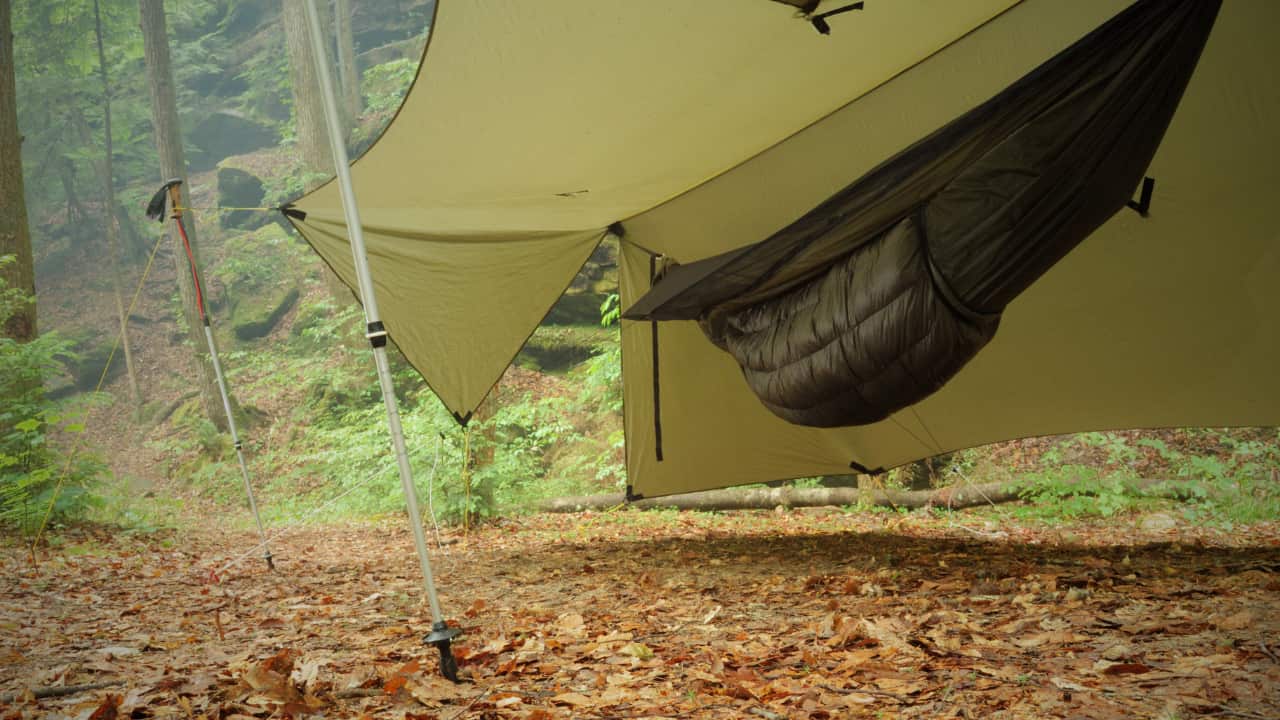
An underquilt is an insulated layer that hangs beneath your hammock to keep you warm from below. Think of it as a specialized blanket designed specifically for the underside of your hammock. It typically features suspension cords at each corner that attach to your hammock, creating a insulating cocoon of air between you and the cold.
Unlike traditional sleeping bags or pads, underquilts are purpose-built for the unique challenges of hammock camping. They hang independently below your hammock and use down insulation or synthetic fill to trap warm air and create a thermal barrier against the cold.
Why You Need an Underquilt
Here’s the critical thing many beginners don’t realize: your sleeping bag alone won’t keep you warm in a hammock. When you lie in a hammock, your body weight compresses the insulation in your sleeping bag beneath you. Compressed insulation loses its ability to trap warm air, which means it can’t keep you warm.
This phenomenon is called the cold butt syndrome in the hammock camping community, and it’s real. Even on mild nights, the air circulating beneath your hammock will pull heat away from your body through convection. Without proper insulation below, you can feel cold even when the temperature seems comfortable.
The physics are simple: air moving beneath your hammock acts like a refrigerator, constantly pulling warmth away from your body. An underquilt solves this by creating a dead air space filled with lofted insulation that blocks heat loss. This keeps you warm all night, regardless of how much air is moving around your hammock.
How Underquilts Work
Underquilts function on the same principle as sleeping bags but are designed for external use. The insulation lofts outward, away from your hammock, creating thousands of tiny air pockets that trap heat. These air pockets prevent your body heat from escaping into the cold air below.
The suspension system is crucial to how underquilts work. Most use adjustable shock cords or continuous loops at each corner. These allow you to position the underquilt close to your hammock for maximum warmth or lower it slightly for ventilation on warmer nights. Getting the right distance is key: too far away and cold air will seep in, too close and the insulation gets compressed.
Quality underquilts also feature a differential cut, meaning the outer shell is larger than the inner shell. This design allows the insulation to loft fully without being restricted, maximizing its thermal efficiency.
Temperature Ratings Explained
Just like sleeping bags, underquilts come with temperature ratings that indicate the coldest temperature at which they’ll keep you comfortable. These ratings typically follow the EN/ISO testing standards or use manufacturer comfort ratings.
Understanding ratings is crucial for thru-hikers. A 20-degree underquilt will keep most people comfortable down to 20°F, though individual experiences vary based on metabolism, what you’re wearing, and whether you’re a warm or cold sleeper.
For three-season thru-hiking on trails like the Appalachian Trail, Pacific Crest Trail, or Continental Divide Trail, most hikers choose underquilts rated between 20°F and 30°F. This range handles cold spring mornings in the mountains and chilly fall nights while not being overly warm for summer.
If you’re hiking only in summer or in warm climates, a 40°F underquilt might suffice. Winter camping or high-altitude hiking requires underquilts rated to 0°F or below. Consider the coldest temperatures you expect to encounter and add a 10-degree buffer for safety.
Down vs Synthetic Insulation
The two main insulation types each have distinct advantages for thru-hikers.
Down insulation offers the best warmth-to-weight ratio, compresses smaller for packing, and lasts longer with proper care. High-quality down is measured in fill power, typically ranging from 800 to 950. Higher fill power means more loft and warmth with less weight. The downside is that down loses insulation when wet and costs more upfront.
Synthetic insulation continues to insulate even when damp, dries faster, and costs less. It’s more forgiving if you’re hiking in consistently wet conditions or if you’re on a tight budget. The tradeoff is extra weight and bulk, typically 20-30% more than comparable down quilts, and synthetic insulation degrades faster over time.
For most thru-hikers, hydrophobic down (treated to resist moisture) offers the best balance. It provides the weight savings of down with improved water resistance, though it still needs protection from heavy rain.
Key Features to Consider
When choosing an underquilt, several features affect both performance and convenience on trail.
Adjustability matters enormously. Look for underquilts with multiple adjustment points that let you dial in the fit. The ability to cinch the sides and ends helps seal out drafts on cold nights and create ventilation on warm ones.
Shell fabric should be lightweight but durable, typically 20D nylon. Some quilts feature a weather-resistant outer layer that protects the insulation from moisture and wind. This adds minimal weight but significant protection.
Footbox design varies between models. A sewn footbox keeps your feet warmer but reduces versatility. An open footbox works across more temperatures but requires careful adjustment to prevent drafts.
Stuff sack size impacts your pack volume. Compression sacks help minimize space, but avoid over-compressing down for long-term storage as it damages the insulation over time.
Sizing Your Underquilt
Underquilts are sized to match hammock length, not your height. Most thru-hikers use 11-foot hammocks and need a corresponding regular or long underquilt.
The underquilt should extend from your shoulders to below your feet, typically 6 to 7 feet long. Width matters too. The quilt needs to wrap around the sides of your hammock enough to block drafts without excessive material that adds weight.
Many manufacturers offer sizing charts based on your hammock dimensions. When in doubt, size up slightly. A little extra coverage beats cold spots, and you can always cinch excess material on warmer nights.
Pairing with a Top Quilt
Underquilts work as part of a complete quilt system. You’ll also need a top quilt (or sleeping bag) for insulation above your body. The two ratings should roughly match, though some hikers prefer a slightly warmer top quilt since they can easily add layers underneath themselves.
Using quilts instead of sleeping bags saves weight because you’re not carrying insulation that gets compressed beneath you. This modular approach also offers more temperature flexibility on trail.
Budget Considerations
Underquilts range from $150 for budget synthetic options to over $400 for premium down models. For thru-hikers, this is a worthwhile investment. You’ll use it every single night for months, and quality insulation directly impacts your sleep quality and recovery.
Cottage manufacturers like Enlightened Equipment, Hammock Gear, Loco Libre, and UGQ make excellent quilts specifically for long-distance hikers. These companies understand the balance between weight, warmth, and durability that thru-hikers need.
Making the Right Choice
Choosing your first underquilt comes down to matching your expected conditions, budget, and weight priorities. Start by determining your temperature needs based on when and where you’re hiking. Then decide between down and synthetic based on likely weather and your budget. Finally, ensure proper sizing for your hammock.
An underquilt transforms hammock camping from a cold, sleepless experience into genuine comfort. With the right underquilt, you’ll stay warm through cold mountain nights, wake up rested, and enjoy the unique benefits of hammock camping throughout your thru-hike. The investment in understanding and choosing the right underquilt pays dividends every single night on trail.