
This website uses affiliate links which may earn a commission at no additional cost to you. As an Amazon Associate I earn from qualifying purchases.
You’re planning to walk 2,000+ miles. You’ll set up shelter roughly 150 times. Some nights you’ll arrive at camp with frozen fingers at 9 PM or later. Other nights you’ll be racing a thunderstorm. You need to understand what you’re getting into with your shelter choice, not just read specs on a website.
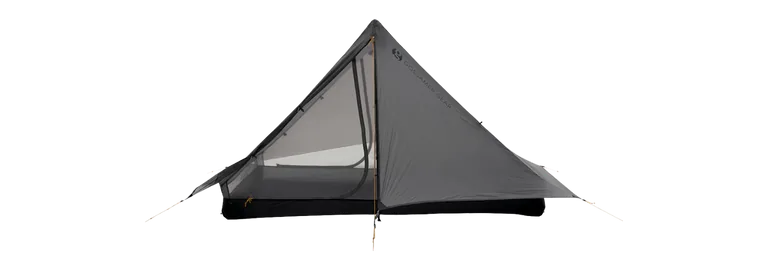
This guide breaks down the Gossamer Gear The Two from the perspective of daily reality on a long trail. Not perfect conditions. Not car camping. The actual experience of living with this tent mile after mile.
The Weight Reality: What 23.5 Ounces Actually Means
The Two weighs 23.5 ounces for the complete shelter. Add stakes and you’re at about 28 ounces total.
Here’s what matters: over a 2,650-mile PCT thru-hike, if you’re comparing this to a 3-pound tent, you’re saving roughly 20 ounces. That’s about 350 calories of food energy saved per day, not from carrying less weight, but from simply not having that weight on your back in the first place. Over five months, that difference accumulates in your joints, your daily mileage capacity, and your evening energy levels.
But weight isn’t everything. The question is whether the trade-offs that get you to 23.5 ounces work for your hiking style.
Pack Size: Beyond the Stuff Sack
The Two compresses to roughly the size of a 12-ounce beverage can when packed loosely. The included stuff sack creates a hot-dog shape that some hikers store in side pockets. But here’s the practical approach: most thru-hikers ditch the stuff sack entirely.
Loose-packed, this tent fills gaps in your pack beautifully. It commonly sits on top of your sleeping bag, against your back panel, with a sleeping pad and cook pot in front of it. Because it’s just fabric and poles, it molds to whatever space you have rather than fighting for a cylindrical cavity in your pack.
One practical consideration: the 10D silnylon fabric is slippery. If you’re trying to compress other gear on top of it, things slide around. Some hikers solve this by keeping it at the bottom of their pack, others embrace the slippery nature and use it as a last item that slides in easily.
The Setup Reality: From Arrival to Shelter
Learning Curve
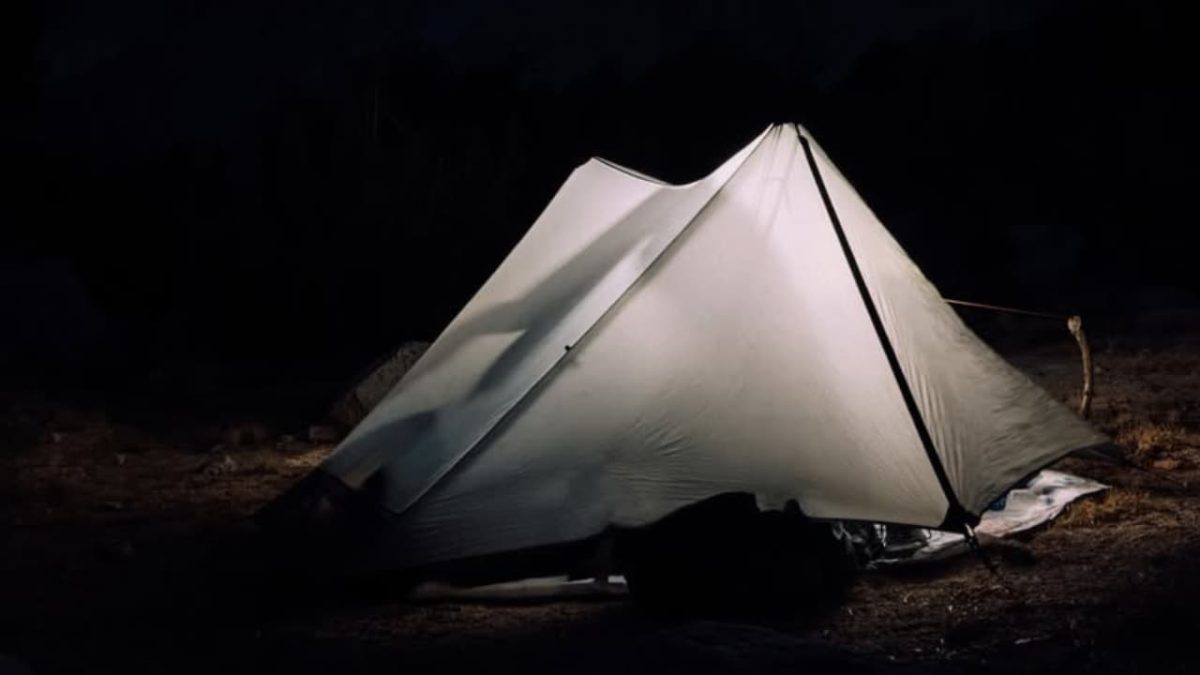
Your first pitch will be humbling. Expect 15-20 minutes of frustration, saggy fabric, and questioning your gear choices. By pitch five, you’ll have it under 10 minutes. By pitch thirty, you can set this up in the dark by feel in under 5 minutes.
The process is intuitive once learned: stake four corners at 45-degree angles, insert trekking poles set to 125cm angled slightly outward, stake the two vestibules perpendicular to the shelter, tension everything tight.
Cold Hands at Dusk
Here’s where non-freestanding tents show their challenge: when your fingers are numb at 8 PM, threading line through tension locks is tedious. The Two uses simple lineloc tensioners, better than many systems, but still requires dexterity. If you regularly camp above treeline in shoulder season, this matters.
The single-wall design offers one advantage in rain: the interior stays dry during setup because there’s no separate fly to fumble with. You stake the corners, insert poles, and your sleeping space is already protected. For thru-hikers entering camp in steady rain, this is significant.
Challenging Ground
Rocky ground where stakes won’t bite? You’ll need to find rocks to tie guylines around or get creative with stake placement. This takes time and problem-solving. Soft sand or snow? You’ll need proper snow stakes or deadman anchors. The included stakes won’t hold.
Frozen ground is the worst scenario for any non-freestanding shelter. The Two requires six stakes minimum. If the ground is frozen solid, you’re in for a difficult evening. This is why many PCT and CDT hikers don’t carry this into the Sierra in May or the Colorado Rockies in September.
Night-to-Night Living: The Honest Experience
Condensation
The Two is a single-wall shelter. In humid conditions or cold nights, condensation will form on the interior. This is physics, not a design flaw.
Here’s the management reality: stake the corners high for maximum ventilation, leave vestibule doors partially open when possible, and keep your sleeping bag from touching the walls. On cold mornings, you’ll wipe down the interior with a bandana and air it out during a break. This adds 10 minutes to your morning routine.
Some nights you’ll wake up to water droplets falling on your face. This is the trade-off for cutting weight with single-wall construction. It’s manageable, but it’s real.
Space for Two vs. Solo Luxury
The interior floor is 84 inches long, 48 inches at the head, 42 inches at the foot. Two standard 20-inch sleeping pads fit side by side with inches to spare. Two 25-inch pads fit, but you’re touching.
For solo use, this is a palace. You can spread out, store gear inside, and sit up comfortably with a trekking pole height of 125cm or taller. This is where The Two shines. Thru-hikers often carry two-person shelters solo for the extra comfort.
For actual two-person use, taller hikers (over 6 feet) will have their head and foot touching the walls when lying on a thick sleeping pad. If both people are over 5’10”, this tent will feel tight. The width is adequate, but the length becomes the limiting factor.
Vestibules: The Rain Day Advantage
Each vestibule provides about 10 square feet of covered space. Both can be fully opened on both sides independently due to a clever clip system that doesn’t compromise structural tension.
On a rain day, these vestibules are critical. You can cook under cover, store wet gear, and put on/take off boots without water dripping into your sleeping area. For thru-hikers who’ve spent a full day hiking in rain, arriving at a shelter with generous vestibules makes the difference between a manageable evening and a miserable one.
The dual-door design means you and your partner can enter/exit without climbing over each other. At 2 AM when nature calls, this matters more than you’d think.
Durability vs. Weight: The Long Trail Test
The Two uses 10D silnylon fabric. This is legitimately thin. You can see light through it. For perspective, most budget tents use 70D fabric.
What actually happens on trail:
- The fabric holds up surprisingly well to normal use
- Abrasion from pack straps or carelessly tossed stakes can damage it
- The bathtub floor is durable enough for typical campsites
- Punctures from sharp rocks or sticks happen if you’re not careful
Thru-hikers who’ve completed the PCT with The Two report the tent arriving intact but showing wear: thin spots, small holes, seam stress. Gossamer Gear doesn’t warrant against durability issues, only manufacturing defects.
The practical calculation: this tent will likely survive one thru-hike with careful use. If you abuse gear or are particularly hard on equipment, you might have issues. If you’re meticulous, it’ll make the distance.
Compare this to a 5-ounce-heavier tent with 20D Dyneema fabric that will last multiple thrus, or a pound-heavier tent with 40D fabric that’s nearly indestructible. There’s no free lunch. You’re trading longevity for weight savings.
Weather Performance: When Conditions Turn
Wind
The Two has large flat end panels at the vestibules. In high winds, these catch air like sails. The tent itself stays upright (the structure is sound) but it flaps and makes noise.
Hikers report solid performance in moderate winds (20-30 mph), but above that, the noise and movement are unpleasant. The key is site selection: if you’re expecting wind, camp below ridgelines or use terrain features for protection. The shelter’s high profile works against you in exposed locations.
Rain
The taped seams and 1800mm waterproof coating keep water out effectively. In heavy rain, the single-wall design means you’re trading fly protection for weight savings. Water doesn’t come through the fabric, but you’re relying on one layer between you and the storm.
The vestibules shed water well when properly staked. The bathtub floor rises high enough to handle splash and runoff in most campsites. The main concern is choosing a site that won’t pool water. The mesh sidewalls allow air in but also allow splash up if you’re in a depression.
Cold Nights
Single-wall shelters trap warmth better than double-wall designs. On cold nights, The Two can be noticeably warmer inside than the outside temperature. Estimates of 10-15 degrees warmer are common. This is genuinely nice at elevation.
The trade-off? That warmth creates condensation. Your breath, body heat, and any cooking you do creates moisture that has nowhere to go but the tent walls. In the High Sierra or Colorado Rockies in early season, you’ll wake to ice crystals on the interior.
The management strategy: ventilate as much as you can tolerate, keep your sleeping bag away from walls, and accept that you’ll wipe down the interior in the morning.
The Money Question: $320 vs. Everything Else
The Two costs $320. Comparable ultralight dyneema two-person tents cost $550-$700.
What you get for the lower price:
- Silnylon instead of Dyneema (heavier, smaller packed size, more durable than you’d expect)
- Simple, proven design without premium materials
- Direct-from-manufacturer pricing without retailer markup
What you give up:
- About 5-8 ounces compared to Dyneema alternatives
- Some resale value (though Gossamer Gear holds value reasonably well)
- The brand recognition of more expensive options
For thru-hikers on a budget, this calculation is straightforward. The difference between $320 and $600 is a week of trail food, a hotel room in town, or quality rain gear. If you’re choosing between a budget sleeping bag and an expensive tent, or cheap shoes and an expensive tent, the tent should wait. Get your footwear and sleep system right first.
The resale reality: used Two tents sell for $200-250 after a thru-hike if they’re in good condition. More expensive Dyneema tents hold resale value better as a percentage, but in absolute dollars, you’re still coming out ahead with The Two.
Who Should Choose The Two
This tent makes sense if you:
- Use trekking poles already (or are willing to)
- Camp primarily below treeline in three-season conditions
- Value weight savings and price over maximum interior space
- Are comfortable with the single-wall condensation trade-off
- Are solo hiking or hiking with a partner under 5’10”
- Practice setup before hitting the trail
- Take reasonable care with lightweight gear
Look elsewhere if you:
- Don’t use trekking poles and don’t want to carry separate poles (adds 5.7 oz)
- Frequently camp on rock, snow, or frozen ground where staking is difficult
- Are over 6 feet tall and want comfortable two-person space
- Prioritize absolute maximum durability over weight
- Want the simplicity of a freestanding tent
- Plan to camp consistently in high winds
- Need the most bombproof shelter for mountaineering use
The Decision Framework
Ask yourself these questions:
1. How often will I be setting up in challenging conditions? If the answer is “frequently,” the learning curve and staking requirements matter more.
2. Am I solo or with a partner? Solo hikers get tremendous value from The Two. Partners need to honestly assess their height and tolerance for close quarters.
3. What’s my total gear budget? If this tent means you can afford better shoes or a lighter pack, the $300 savings matters significantly.
4. Do I already use trekking poles? If yes, this is free shelter structure. If no, you’re adding complexity to your hiking system.
5. How careful am I with gear? The 10D fabric requires reasonable care. If you’re someone who tosses your tent in your pack without looking, you’ll have problems.
Final Thoughts
The Gossamer Gear The Two isn’t the lightest tent available, nor the most spacious, nor the most durable. It’s a carefully considered set of trade-offs that work brilliantly for a specific type of thru-hiker.
If you’re planning a long trail, using trekking poles, hiking primarily in three-season conditions, and want excellent value in an ultralight shelter, this tent deserves serious consideration. The combination of sub-24-ounce weight, generous vestibules, and $320 price creates a package that’s hard to beat for the thru-hiking application.
Just practice the setup before you leave. Trust me on this one.