
This website uses affiliate links which may earn a commission at no additional cost to you. As an Amazon Associate I earn from qualifying purchases.
When you first start researching hammock camping for the trail, you’ll quickly discover that staying warm isn’t just about what’s on top of you. The biggest challenge hammock campers face is cold air flowing beneath them, and you’ll need insulation underneath to stay comfortable. This brings us to the fundamental choice every hammock hiker must make: sleeping pad or underquilt?
Let’s break down everything you need to know to make the right choice for your adventure.
Why You Need Bottom Insulation
Before diving into the comparison, understand this critical point: your sleeping bag alone won’t keep you warm in a hammock. When you lie in a hammock, your body weight compresses the insulation in your sleeping bag or quilt beneath you, rendering it nearly useless. Meanwhile, air circulates freely under the hammock, creating what’s known as cold butt syndrome. Even on mild nights, you can feel uncomfortably cold without proper bottom insulation.
This is different from ground camping, where the earth itself provides some insulation. In a hammock, you’re suspended in the air, exposed to wind and convective heat loss from all sides.
What Is a Sleeping Pad?
A sleeping pad is exactly what it sounds like: an insulated pad (either foam or inflatable) that you place inside your hammock to sleep on. These are the same pads ground campers use in tents. Popular options include closed-cell foam pads like the Therm-a-Rest Z Lite Sol or inflatable pads like the Nemo Tensor or Therm-a-Rest NeoAir series.
What Is an Underquilt?
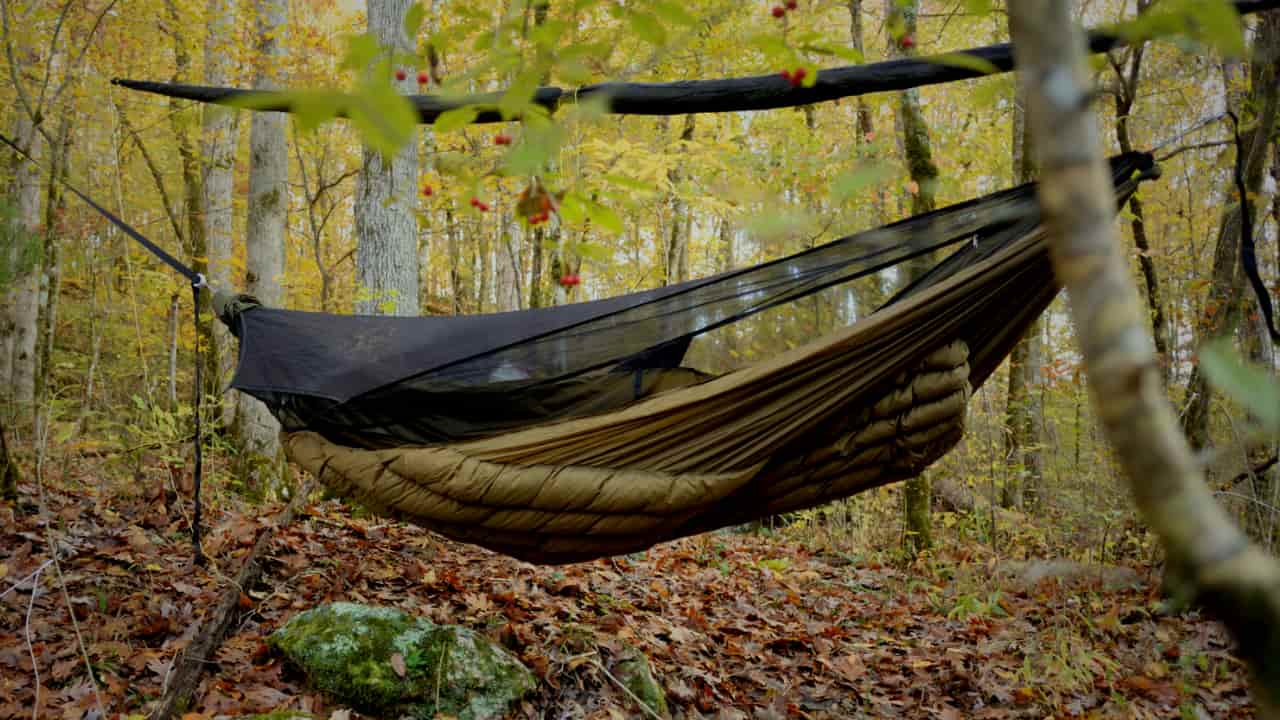
An underquilt is an insulated quilt specifically designed to hang beneath your hammock, creating a cocoon of warmth around the bottom and sides. It attaches to your hammock suspension using a combination of hooks, cords, and toggles, creating a dead air space between the underquilt and hammock that traps your body heat.
Example: UGQ Zepplin
Sleeping Pad: The Pros
Lower initial cost is the biggest advantage for beginners. If you already own a sleeping pad for ground camping, you can use it in your hammock immediately at no extra expense. Even if you need to purchase one, quality sleeping pads generally cost less than comparable underquilts.
Versatility makes pads appealing for hikers who switch between hammock and ground camping. You’re not locked into one shelter system, which is valuable when hammock camping isn’t possible due to lack of trees or regulations.
Simplicity cannot be overstated. There’s no learning curve for setup. You inflate or unroll your pad, place it in your hammock, and you’re done. No adjustments, no fiddling with suspension points.
Backup sleeping option means if your hammock fails or you need to sleep on the ground unexpectedly, you already have appropriate insulation.
Sleeping Pad: The Cons
Comfort issues top the list of complaints. Sleeping pads can shift, slide, and bunch up during the night as you move. Many hammock campers find themselves constantly adjusting their pad, leading to poor sleep quality. The diagonal sleeping position that makes hammocks comfortable can cause pads to slip even more.
Less efficient warmth occurs because pads only insulate where they make contact with the hammock fabric. Air can still flow around the edges, and any gaps between your body and the pad create cold spots. You’re also compressing the pad with your body weight, reducing its insulating ability.
Inflatable pads risk punctures, which can be disastrous on a long trail. While repairable, a punctured pad in the backcountry means a cold, miserable night.
Size constraints matter because hammock sleeping often requires a wider pad than ground camping to prevent cold edges. This means more weight and bulk for adequate coverage.
Underquilt: The Pros
Superior warmth is the primary reason experienced hammock campers prefer underquilts. The insulation surrounds the hammock without compression, maintaining its full loft. The dead air space created between the underquilt and hammock provides exceptional insulation value.
Comfort is unmatched because there’s nothing between you and the hammock fabric. You get the full, unrestricted experience of hammock sleeping with the natural stretch and give that makes hammocks comfortable. No sliding, no bunching, no adjusting in the middle of the night.
Wider temperature range becomes possible because underquilts are specifically designed and rated for various temperature conditions. You can choose an underquilt rated for your expected conditions, from summer nights to below freezing temperatures.
Better sleep quality results from the combination of comfort and consistent warmth. Once properly adjusted, an underquilt requires no attention throughout the night.
Underquilt: The Cons
Higher cost presents the biggest barrier to entry. Quality underquilts typically range from $150 to $400 or more, depending on temperature rating and materials. This is a significant investment for beginners still testing whether hammock camping is right for them.
Learning curve can be frustrating initially. Properly adjusting an underquilt requires understanding the suspension system, achieving the right tension, and positioning it correctly for optimal warmth. Your first few nights might involve trial and error.
Hammock-specific gear means your underquilt has limited use outside of hammock camping. Unlike a sleeping pad, you cannot use it for ground camping, reducing its versatility.
Bulk and pack size can be significant, especially with full-length, cold-weather underquilts. While they compress reasonably well, they still take up valuable pack space.
Wind sensitivity matters because underquilts can shift or blow in strong winds if not properly secured, potentially creating gaps that let cold air in.
Weight Considerations
Weight is critical for thruhikers. Generally, lightweight inflatable pads (like the Therm-a-Rest NeoAir XLite) weigh 8-12 ounces, while quality underquilts typically weigh 12-20 ounces for three-season use. However, warmer underquilts designed for shoulder seasons or winter can weigh significantly more.
The weight difference isn’t dramatic enough to be the deciding factor for most hikers. Focus instead on which system will give you better sleep and keep you warmer.
Cost Comparison
For budget-conscious beginners, here’s the reality:
A decent sleeping pad costs $50-$180, and you may already own one. A quality underquilt starts around $150 and can exceed $350 for cold-weather models. However, consider this a long-term investment. A well-made underquilt can last for thousands of miles and many years of use.
Some thruhikers start with a pad to test hammock camping, then upgrade to an underquilt once they’ve committed to the hammock life.
Hybrid Approach
Some hikers use both systems together for extreme cold weather, combining the insulation of an underquilt with a thin pad for additional warmth and a more structured sleeping surface. This provides maximum warmth but adds weight and cost.
Others use an underquilt with a short, torso-length pad for shoulder-season camping, placing the pad where their body compresses the underquilt most (typically the shoulder and hip area).
Making Your Decision
Choose a sleeping pad if you:
- Are new to hammock camping and want to test it affordably
- Already own a quality pad
- Switch frequently between hammock and ground camping
- Have a very tight budget
- Prefer simplicity over optimization
Choose an underquilt if you:
- Are committed to hammock camping
- Prioritize comfort and sleep quality
- Camp in colder conditions regularly
- Want the most efficient warmth-to-weight ratio
- Don’t mind the initial learning curve
Final Thoughts
There’s no universally correct answer. Thousands of thruhikers have successfully completed long trails using either system. The “best” choice depends on your budget, camping style, and priorities.
Many experienced hammock campers consider an underquilt essential and wouldn’t go back to using pads, citing the dramatic improvement in comfort and warmth. However, plenty of thruhikers complete entire trails using sleeping pads without issues.
If you’re just starting out, consider beginning with a sleeping pad to minimize initial investment. As you gain experience and confidence in hammock camping, you can make an informed decision about whether upgrading to an underquilt is worth the investment for your specific needs.
Whatever you choose, proper insulation beneath your hammock transforms it from a cold, miserable experience into the comfortable, restful sleep that will keep you energized on the trail.