
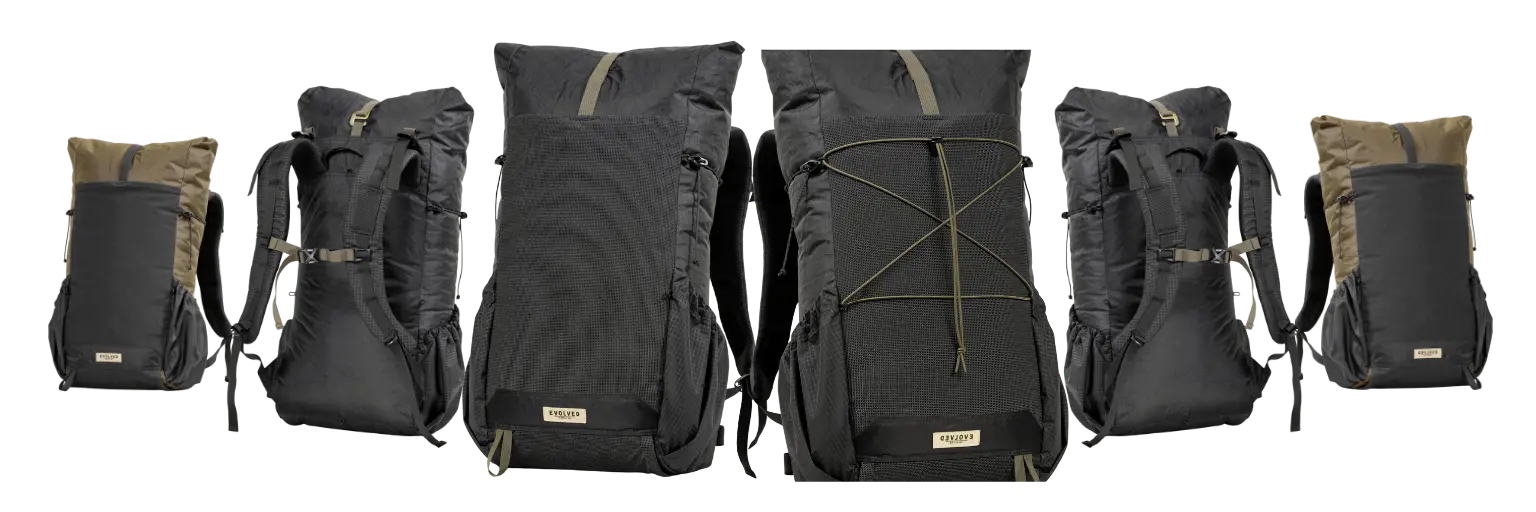
When you’re planning your first thru-hike, the backpack decision can feel overwhelming. You need something that works for your entire journey, not just the conditions you’ll face in the first week. The Evolved Supply Co. Ranger takes a different approach than traditional backpacks by giving you control over how much pack you actually carry.
Understanding the Modular Concept
The Ranger arrives as what the company calls “stripped down,” which means you get the core backpack body without optional accessories. This isn’t a limitation but rather a framework. The base pack weighs 16 ounces (444 grams) and includes everything essential: the main body, shoulder straps, roll-top closure, side pockets, front stretch pocket, and bottom pocket with a dedicated trash hole.
From there, you can add a hip belt system (3 sizes available), shoulder pockets, water bottle sleeves, Y-strap for bear canister attachment, pad attachment systems, and front shock cord. This matters because your needs on the Appalachian Trail differ dramatically from the Pacific Crest Trail, and even within a single trail, your requirements shift from the desert to the high Sierra.
The Weight Question: What Those Numbers Really Mean
At 16 ounces stripped down, the Ranger sits in the ultralight category without requiring you to sacrifice durability. When fully loaded with all accessories, the pack reaches approximately 21 ounces. To put this in perspective, many frameless packs in the 35-40 liter range weigh between 18-32 ounces, so the Ranger gives you flexibility within that spectrum.
The comfort carry range is listed at 20 pounds. This is an honest assessment for a frameless pack. If you’re planning to regularly carry 25-30 pounds, you likely need a framed pack regardless of the brand. The Ranger works best for hikers who’ve refined their base weight to around 10-12 pounds, allowing room for food and water without exceeding the comfort threshold.
The 35-liter main compartment plus 11.8 liters of external pocket space (totaling approximately 46.8 liters) provides enough space for multi-day food carries and bulkier items like bear canisters when needed.
Internal Space and How to Actually Use It
The Ranger uses a simple roll-top design with a snap closure, which offers several practical advantages. First, you can adjust the pack’s height based on how much gear you’re carrying. During a food stop when you’re loaded up, you can roll it less and maximize volume. As you eat through supplies, you can roll it down tighter, which improves load stability and keeps your center of gravity closer to your body.
The main compartment dimensions measure 32 inches tall (when unrolled), 11 inches wide, and tapers from 6.5 inches at the bottom to 5.75 inches at the top. This taper is intentional. It creates a more ergonomic fit against your back and prevents the pack from pulling away from your shoulders when loaded.
Inside, there are no internal organizers or pockets, which keeps weight down and gives you maximum flexibility. Most thru-hikers use a pack liner (a 2.5-ounce nylofume liner is available separately) to create a waterproof inner chamber, then organize gear with stuff sacks or by the “burrito” method of wrapping your sleeping bag around other items.
External Storage That Actually Works
The large side pockets are made from UltraGrid material, which is stiffer than traditional stretch mesh but far more durable. These pockets easily swallow a 1-liter Smart Water bottle, tent stakes, or a puffy jacket you want quick access to during the day. The firmer mesh means items don’t sag and create that unflattering “loaded diaper” look that some ultralight packs develop.
The front stretch pocket received an upgrade in the 2.0 version with extended storage capacity and shock-cord attachment points. This becomes your active storage zone for items you use constantly: rain jacket, food bag, dirty clothes, or even your shelter if you’re doing high-mileage days and want to shave seconds off camp setup.
The bottom pocket features a trash hole, which is more useful than it sounds. On trail, you can stash used toilet paper, food wrappers, or any trash without having to open your main compartment. When you reach a trash can, everything dumps out easily.
The Attachment System: Y-Strap and Beyond
For PCT hikers or anyone facing bear canister requirements, the Y-strap option is essential. This webbing system creates a stable platform for strapping a BearVault or similar container vertically on the outside of your pack. Without this, you’re forced to put the canister inside, which consumes most of your main compartment and makes packing extremely inefficient.
The multi-position side compression cord with tension hooks helps stabilize your load. Unlike fixed compression straps, you can adjust these to accommodate variable loads. Carrying just a sleeping bag and a few items? Cinch them down tight. Loaded up with six days of food? Give yourself more room but still maintain stability.
The pack also features attachment points for sleeping pads on the back panel, ice axe loops that can be stowed when not needed, and daisy chains on the shoulder straps for clipping on a GPS device, camera, or other small items you want immediately accessible.
Materials: What You’re Actually Getting
The Ecopak EPLX 200 main body uses recycled plastic water bottles, which is environmentally thoughtful, but more importantly, it performs exceptionally well. The fabric has a somewhat plastic-like hand feel that’s stiffer than traditional backpack fabrics. This stiffness helps the pack hold its shape even when partially full.
The hybrid seam design combines seam-taped horizontal seams with bound vertical seams, creating a pack that’s highly water-resistant without the weight penalty of fully taped construction. In practice, this means the inside of your pack stays dry during everything except extended downpours or accidental submersion.
The UltraGrid BlackOut mesh on side pockets and shoulder straps resists snagging from branches and thorns far better than standard mesh. It won’t develop those annoying pulled loops that eventually lead to tears.
Comfort Features That Make Mile 1,000 Feel Like Mile 10
The contoured pack body design introduced in the 2.0 version creates a more anatomical fit. Instead of being a rigid rectangle against your back, the pack follows your spine’s natural curve. This becomes increasingly important as daily mileage climbs.
The shoulder straps use plush, half-inch-thick 3D mesh combined with UltraGrid material. This combination provides cushioning where you need it without excessive bulk. The straps stay comfortable even during 25+ mile days.
Load lifters might seem like a small detail, but they fundamentally change how the pack carries. By adjusting these straps, you can pull the top of the pack closer to your shoulders, which prevents that levered-away feeling when you’re carrying a tall load. They also help transfer weight more efficiently to your hips when using the optional hip belt.
The adjustable sternum strap stabilizes the shoulder straps and prevents them from sliding off your shoulders on steep climbs.
Hip Belt: To Add or Not to Add
The Ranger comes without a hip belt by default, and for some hikers, that’s perfect. If your total pack weight stays under 15 pounds, you may find a hip belt unnecessary. For others, especially when carrying food for five-day sections or mandatory bear canisters, the optional hip belt makes a significant difference.
The belt is available in three sizes (Small: 26-29 inches, Medium: 29-34 inches, Large: 35-40 inches) for $32. Some hikers use alternative hip belts from other manufacturers that include pockets, giving you accessible storage for snacks, sunscreen, and other frequently used items.
Loading, Accessing, and Living With This Pack
Packing strategy matters with any frameless pack. Place your sleeping bag at the bottom, heaviest items (food, water, bear canister) in the middle close to your back, and lighter items toward the top and sides. This creates the most comfortable carry by keeping weight centered.
Access during the day happens primarily through the front stretch pocket and side pockets. You shouldn’t need to open the roll-top closure until you’re making camp. Everything you need while hiking should live in external pockets.
The shock-cord attachment points on the front pocket let you secure a wet tent or additional items externally without compromising the pack’s core organization.
Maintenance and Longevity
The Ecopak material cleans easily with a damp cloth and mild soap. The pack doesn’t develop odors the way traditional nylon packs sometimes do. The lack of complex zippers or mechanical parts means there’s very little that can fail mechanically.
The pack is made in the USA (Arizona specifically), which speaks to construction quality and also makes warranty service or repairs more straightforward if needed.
Who Should Choose The Ranger
This pack makes sense if you:
- Have refined your base weight to the ultralight range (under 12 pounds)
- Value versatility and want a pack that adapts to different trips
- Prefer simplicity over built-in organization systems
- Want a pack that grows with your skills rather than one you’ll outgrow
- Are planning a thru-hike where requirements change (like PCT with Sierra section)
When to Look Elsewhere
Consider different options if you:
- Regularly carry loads over 25 pounds
- Prefer maximum organization with internal pockets and compartments
- Want a framed pack for better load distribution
- Need larger capacity (50+ liters) for winter camping or extended expeditions
- Prefer traditional backpack aesthetics over minimalist design
The Real Answer
The ESC Ranger succeeds because it doesn’t try to be everything to everyone. It’s an honest ultralight pack built around the reality that thru-hikers need different tools at different times. The modular system means you’re not paying for features you’ll never use, but you’re also not locked out of adding capability when circumstances demand it. For hikers who’ve done their homework on gear weight and understand their needs, the Ranger delivers exactly what it promises: a lightweight, durable, adaptable platform for covering serious miles.