
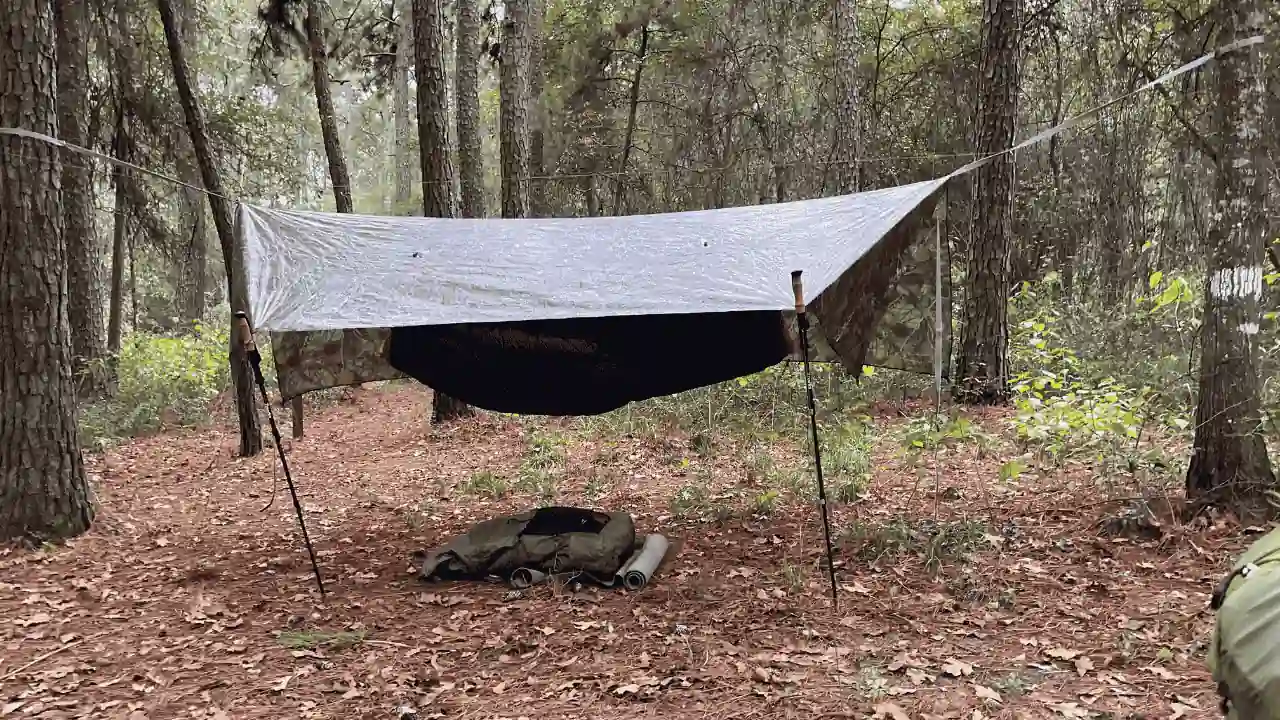
When you start researching hammock camping for thru-hiking, you’ll quickly notice that gathered end hammocks appear in nearly every experienced hiker’s setup. This isn’t random preference or trend following. There are specific, practical reasons why this design has become the standard for long-distance hiking, and understanding these reasons will help you decide if a hammock system belongs in your gear list.
What Makes a Gathered End Hammock Different
A gathered end hammock uses fabric that bunches or “gathers” at each end where it connects to the suspension system. Unlike bridge hammocks that use spreader bars or structural ridgelines to create a flat lay, gathered end designs rely on your body weight and proper hang angle to create the sleeping surface. The fabric typically measures between 10 and 11 feet long and 4 to 5 feet wide, creating a cocoon-like shape when you lie in it.
This design dominates the thru-hiking world for one primary reason: simplicity. Fewer components mean fewer failure points, less weight, and easier repairs on trail. A gathered end hammock reduces the sleeping system to its essential elements: fabric, suspension, and protection from the elements.
Some of the most common vendors people will purchase from for quality hammocks:
- Dutchware Gear
- Superior Gear
- Hammock Gear
- Warbonnet Outdoors
- Walhalla Hammocks
Weight That Actually Matters on Long Trails
The base weight of a gathered end hammock ranges from 6 to 12 ounces for the hammock body alone. When you add a suspension system (2-4 ounces), you’re looking at roughly 8 to 16 ounces for your primary sleeping platform. Compare this to a sleeping pad that weighs 12 to 20 ounces plus a groundsheet at 2 to 4 ounces, and the weight advantage becomes clear.
Your complete hammock shelter system includes the hammock, suspension, tarp, and underquilt or insulation. A full lightweight system typically weighs between 1.5 and 2.5 pounds. While this isn’t always lighter than ultralight tent setups, the weight distributes differently in your pack. The hammock and suspension compress to roughly the size of a water bottle, while the tarp rolls similarly to a tent body. This packability advantage means you can position weight exactly where you want it in your pack rather than dealing with rigid tent poles or bulky packed dimensions.
The Setup Reality Check
Your first hammock hang will probably take 10 to 15 minutes. You’ll second-guess your tree selection, fiddle with strap height, and adjust tension multiple times. This is normal and temporary. By the end of your first week on trail, you’ll complete setup in under five minutes, often faster than pitching a tent on uneven ground.
The process itself involves finding two trees (or suitable anchor points) spaced 12 to 15 feet apart, wrapping your suspension straps around each trunk at roughly head height or slightly above, clipping in your hammock, and adjusting for proper sag. The ideal hang creates a 30-degree angle from the anchor point to the low point of your hammock, which translates to about 18 inches of sag in the middle.
Tree selection becomes intuitive quickly. You’re looking for healthy, living trees at least 6 inches in diameter, free from loose bark or rot. Hardwoods work best because they resist the slight compression from suspension straps better than softwoods. As you hike, you’ll start automatically scanning campsites for suitable hang spots, the same way tent campers look for flat ground.
Why Your Body Recovers Better in a Hammock
The ergonomic advantage of hammock sleeping directly impacts your hiking performance. When you lie at a slight diagonal in a gathered end hammock (typically 10 to 20 degrees off center), your body settles into a gentle curve that follows your natural spine position. There are no pressure points on hips or shoulders, no fighting with a sleeping pad that slides around, and no waking up because your arm fell asleep under you.
Thru-hikers consistently report reduced morning stiffness when sleeping in hammocks. The gentle support distributes your weight across your entire back rather than concentrating it on a few contact points. This matters when you’re hiking 15 to 25 miles daily for weeks or months. Better sleep means better recovery, which translates to more sustainable mileage and reduced injury risk.
The suspended position also promotes better circulation. Your legs can achieve a slight elevation naturally depending on how you position yourself, which helps reduce swelling after long hiking days. Many hikers find they can get comfortable without a pillow or with just a small stuff sack, because the hammock’s curvature already supports head and neck alignment.
Weather Performance in Real Conditions
A properly configured hammock system handles rain and wind as well as any tent. Your tarp covers the hammock with extra coverage on each end, creating a protected envelope. Because you’re suspended above the ground, water pooling and ground splash become non-issues. Setting up in rain actually works to your advantage, as you can often hang your hammock under an already-pitched tarp without getting your sleep system wet.
Wind management requires understanding the physics involved. Your hammock acts like a sail when hung perpendicular to wind direction, but this also means you can orient yourself strategically. Many hammock tarps include doors or panel systems that close off the ends, creating a more enclosed shelter in challenging conditions. The suspension system absorbs and dampens wind movement rather than transferring it directly to your body like tent walls do.
Cold weather presents the main challenge for hammock systems. The convective heat loss from air moving underneath you means you need insulation below your body. An underquilt solves this by creating a dead air space beneath the hammock. Quality underquilts are rated for specific temperature ranges, just like sleeping bags. Some hikers use sleeping pads inside the hammock instead, which works but reduces some of the comfort advantages.
Morning Efficiency and Maintenance
Breaking camp in a hammock takes three to five minutes once you develop a routine. Unclip the hammock, stuff it in its bag (no folding required), unwrap your tree straps, take down your tarp, and you’re done. There’s no tent body to dry, no stakes to pull, and no need to find a spot to shake out debris.
Cleaning and drying happen naturally in most cases. Because you’re suspended above ground, dirt and debris don’t accumulate the way they do in tents. Most of what gets in your hammock is what you bring in on your clothes and body. A quick shake before packing usually suffices. When you do need to clean your hammock, the entire system can go in a washing machine on gentle cycle, then hang dry (appropriately) in an afternoon.
Durability surprises most new hammock users. Quality gathered end hammocks use ripstop nylon rated for 400 to 500 pound capacity, with reinforced stitching at stress points. These materials resist the wear that comes from thousands of miles of compression, stretching, and repeated setup. Small tears can be repaired with patches or stitching, and most catastrophic failures (which are rare) happen at the suspension attachment points, which are replaceable.
The Practical Realities of Trail Life
Site selection flexibility represents one of the biggest advantages on actual thru-hikes. While tent campers need relatively flat, clear ground, you need two trees. This opens up camping options in rocky terrain, on slopes, in areas with heavy ground vegetation, and in places where ground saturation would make tent camping miserable. Many stealth camping situations favor hammocks because you can set up in areas that appear unsuitable for camping to casual observers.
The suspended sleep system also means no rock removal, no root avoidance, and no clearing debris to create a flat spot. You can camp in locations that would require significant site preparation for a tent. This matters on high-mileage days when you want to stop hiking and go to sleep rather than spend 20 minutes preparing a tent site.
However, hammocks do have limitations. Tree density varies by region and elevation. Sections of trail above treeline, through desert areas, or in heavily managed forests with wide tree spacing can create challenges. Most thru-hikers who commit to hammocks carry lightweight stakes and either bivvy sack or learn to adapt their tarp for ground mode as a backup option.
Making the Choice That Fits Your Hike
Gathered end hammocks work best for hikers who prioritize sleep quality and recovery over absolute minimum weight. If you know you’re a light sleeper, struggle with sleeping pads, or have back issues that make ground sleeping uncomfortable, the hammock’s advantages multiply. The system shines on trails with good tree coverage, in wet climates, and for hikers who value quick setup and breakdown.
Consider sticking with ground systems if your planned trail includes significant above-treeline or desert sections, if you strongly prefer the security feeling of enclosed shelter, or if you sleep cold and want to minimize the complexity of your insulation system.
For most beginners interested in hammock camping, start with a mid-range gathered end hammock from an established manufacturer, learn proper hang technique in your backyard or local park, and test the system on weekend trips before committing to a thru-hike. The investment in learning pays dividends in comfort, recovery, and flexibility over thousands of trail miles.