
This website uses affiliate links which may earn a commission at no additional cost to you. As an Amazon Associate I earn from qualifying purchases.
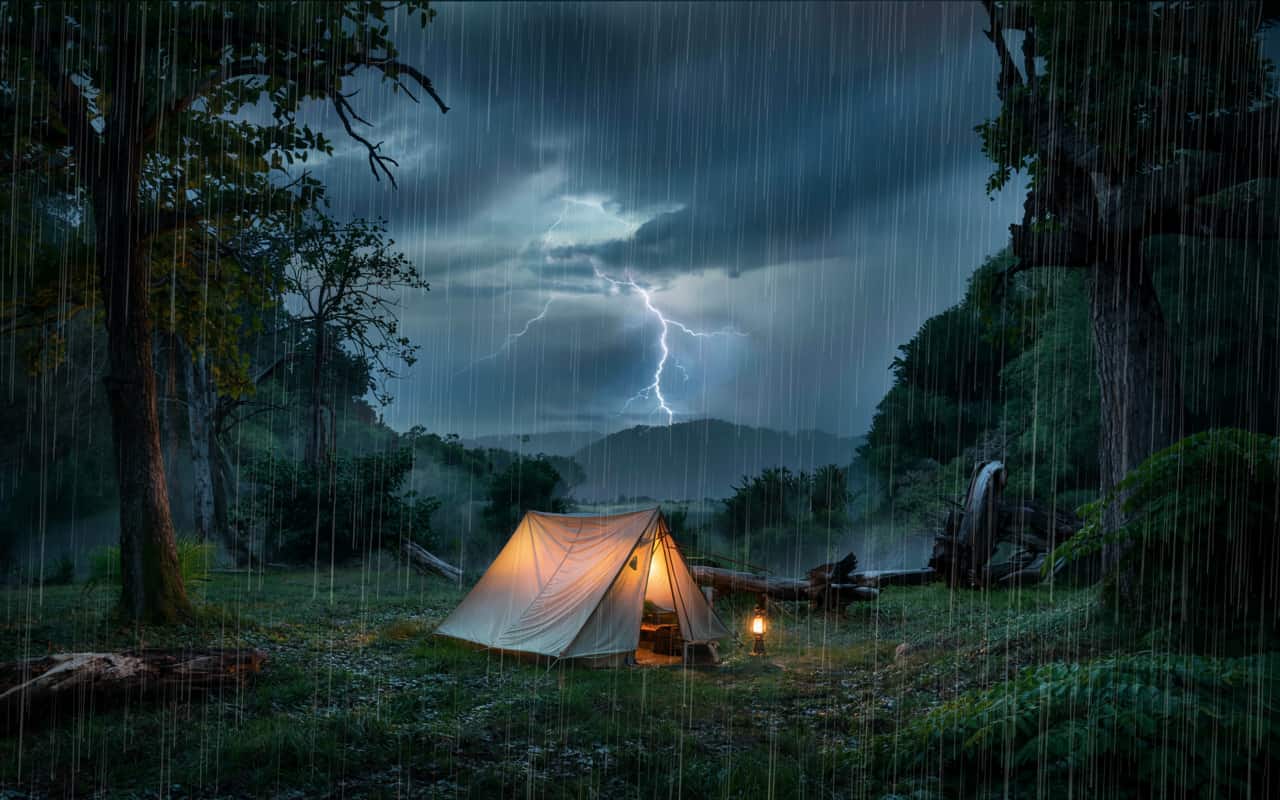
Camping in a thunderstorm can be scary, especially when you’re on a thru-hike miles from any shelter. Unlike day hikers who can retreat to their cars, you need to understand what dangers thunderstorms present, how to set up camp efficiently in poor weather, and what gear keeps you dry and safe.
On a long-distance hike, you will face storms. Preparation matters more than luck.
Understanding Thunderstorm Dangers
Most hikers know lightning is the biggest threat, but thunderstorms create multiple hazards that can turn dangerous quickly.
Lightning Strikes and Ground Current
Lightning is deadly, and if you hear thunder, you’re within striking distance of the storm. The best protection is a hard-sided vehicle or fully enclosed building, neither of which you’ll have on the trail.
What many hikers don’t realize is that you don’t have to be struck directly to get hurt. Ground currents spread out more than 30 feet from where lightning hits, and these currents cause most lightning injuries. The electricity flows through the ground and can knock you unconscious or worse.
Hypothermia from Wet Gear
Rain and storms bring cold, and wet gear loses its ability to insulate. Your down sleeping bag or puffy jacket becomes useless when soaked. Even in mild weather, hypothermia becomes a real threat when you can’t stay warm or dry. If your sleeping system gets wet without backup gear in dry bags, you face serious problems maintaining core body temperature.
Falling Trees and High Winds
During storms, high winds snap branches and topple trees. Widowmakers (dead branches hanging overhead) become deadly projectiles. Your tent can blow away or collapse if not properly staked, leaving you exposed when you need shelter most.
Flash Flooding
Heavy rains cause flash flooding that makes rivers and streams rise rapidly. If you’re camped near water, you could be swept away in minutes. Campsite placement is your first line of defense against this danger.
Weather Awareness and Planning
The best way to stay safe is avoiding dangerous situations before they develop.
Check Forecasts Before Your Hike
Local forecasts for your hiking area may differ significantly from your home location. Use GPS devices like a Garmin InReach to monitor weather throughout your hike. Many thru-hikers also check forecasts at trail towns and hostels.
Learn to Spot Building Storms
Watch for towering cumulus clouds with flat bases and cauliflower shapes. These clouds develop into thunderstorms, and once they reach 30,000 feet, the storm is forming. Clouds that darken and develop anvil shapes mean the storm is already underway.
Listen for thunder well before storms arrive. In mountains, thunderstorms typically build in early afternoon, so plan to reach camp or get below treeline by noon during storm season. Those first rumbles of thunder give you time to find lower ground or secure your campsite.
The 30-Minute Rule
Wait at least 30 minutes after the last rumble of thunder before leaving shelter. Charge can remain in clouds and on the ground longer than most people expect. Many lightning injuries happen when people assume the danger has passed too soon.
Choosing a Safe Campsite
Your campsite location can mean the difference between riding out a storm safely or facing serious danger.
Site Selection Basics
Avoid these dangerous locations:
- Open fields or hilltops (you become the tallest object)
- Ridge lines and mountain peaks
- Areas beneath tall, isolated trees
- Low-lying areas prone to flooding
- Sites with dead trees or widow makers overhead
Safer camping locations:
- Valleys or ravines (lower ground)
- Among stands of similarly-sized trees (if in forest)
- At least 30 feet from the tallest objects
- On slightly elevated ground that won’t flood
Tent Setup for Storms
Make sure your tent has plastic or carbon fiber poles, not metal poles that could attract electrical current. Stake out all guylines properly before storms hit. Add shock cord to prevent your rain fly from flapping and tearing in high winds. Check your setup when you first hear thunder to ensure everything will hold through the weather.
A tent offers no protection from lightning, but it does keep you dry and protects against hypothermia. Choose your tent location carefully, keeping it away from tall trees by at least 30 feet while avoiding wide-open areas.
When Thunder Roars: Immediate Actions
Get to Safety Fast
If you’re caught outside during a thunderstorm, move as fast as you can to a safer place. The goal is to minimize the time you’re exposed to danger.
Priority locations (from safest to less safe):
- Enclosed building with plumbing and wiring
- Hard-topped vehicle with windows closed
- Trail shelters (though not grounded, they offer some protection)
- Your tent in a carefully chosen location
- Open ground (last resort)
Avoid these false shelters:
- Open picnic pavilions or pergolas
- Outhouses
- Bus stops
- Single, isolated trees
If No Shelter Exists
The “lightning crouch” is outdated advice that was debunked almost 20 years ago—it provides no meaningful protection. Instead, keep moving toward safety. The National Lightning Safety Council stopped recommending crouching in 2008 after analysis showed it doesn’t prevent injuries.
If you’re truly stuck in the open:
- Get to the lowest ground possible (ravines, depressions)
- Move away from isolated tall objects by at least 30 feet
- Stay away from all water bodies
- Get off ridge lines and peaks immediately
- Remove metal-framed backpacks, trekking poles, and other gear
Group Safety Protocol
If you’re in a group during a thunderstorm, separate from each other. Spreading out by at least 30 feet reduces the number of people who could be injured if lightning strikes nearby. This ensures someone remains uninjured and can render aid if needed.
Essential Gear Considerations
Keep Critical Gear Dry
Store your sleeping bag, extra clothes, and electronics in dry bags or waterproof stuff sacks. Consider carrying a lightweight 1/8-inch closed-cell foam pad in addition to your sleeping pad. This provides insulation from the ground and serves multiple purposes: sitting during breaks, emergency insulation, and extra protection in storms.
Rain Gear and Layers
Have your rain jacket and pants accessible before storms hit. Staying dry prevents hypothermia and keeps you functional during the storm. Pack a warm layer in your dry bag as backup.
Weather Monitoring Tools
GPS devices with weather features let you track storms. A portable NOAA weather radio provides forecasts and warnings in backcountry areas without cell service.
Specific Scenarios for Thru-Hikers
Above Treeline or on Exposed Ridges
This is your most dangerous situation. When thunder is heard, lightning is within 10 miles and can strike. Drop elevation immediately. Don’t wait to see how close the storm is. Hiking down even 15 minutes significantly reduces your exposure risk.
In Forest or Wooded Areas
Stay near lower stands of trees rather than tall, isolated specimens. Set up your tent among similarly-sized trees, maintaining distance from the tallest ones. Check overhead for dead branches before committing to a site.
Trail Shelters and Lean-tos
AT-style shelters aren’t perfectly safe since they’re not grounded and have open sides, but they’re better than nothing. If one is available when storms threaten, use it. Stay inside for at least 30 minutes after the last thunder.
Near Water Sources
Water is an excellent conductor, making bodies of water dangerous during lightning. This applies to everything from puddles to lakes. Camp at least 100 yards from shorelines when storms are possible. If you’re filtering water when thunder starts, move away from the water source immediately.
Key Safety Reminders
| Scenario | Action | Why |
|---|---|---|
| Hear thunder | Move to safer location immediately | Thunder means lightning is within 10 miles |
| Storm passes | Wait 30 minutes after last rumble | Charge remains in atmosphere after visible storm ends |
| In open area | Get to low ground, avoid isolated tall objects | Reduces chance of being struck |
| With group | Spread out 30+ feet apart | Reduces injuries if ground current flows |
| Metal gear | Store away from sleeping area | Metal conducts electricity |
Stay Calm and Prepared
Storms can be frightening, but panic leads to poor decisions. Have a plan before you need it. Know what you’ll do if storms hit while hiking, where you’ll seek shelter, and make sure your hiking partners understand the plan.
The best approach is avoiding thunderstorms entirely through careful planning and weather monitoring. When that’s not possible, smart decisions about campsite selection and quick action when storms develop will keep you as safe as possible.
Camping in thunderstorms is always risky. The US averages around 20 lightning deaths per year now, down from 50 per year in 2001, largely due to greater awareness. Take the threat seriously, but don’t let fear keep you off the trail. Preparation and knowledge give you the tools to handle storms when they come.
Remember the simple rule: When thunder roars, go indoors.