
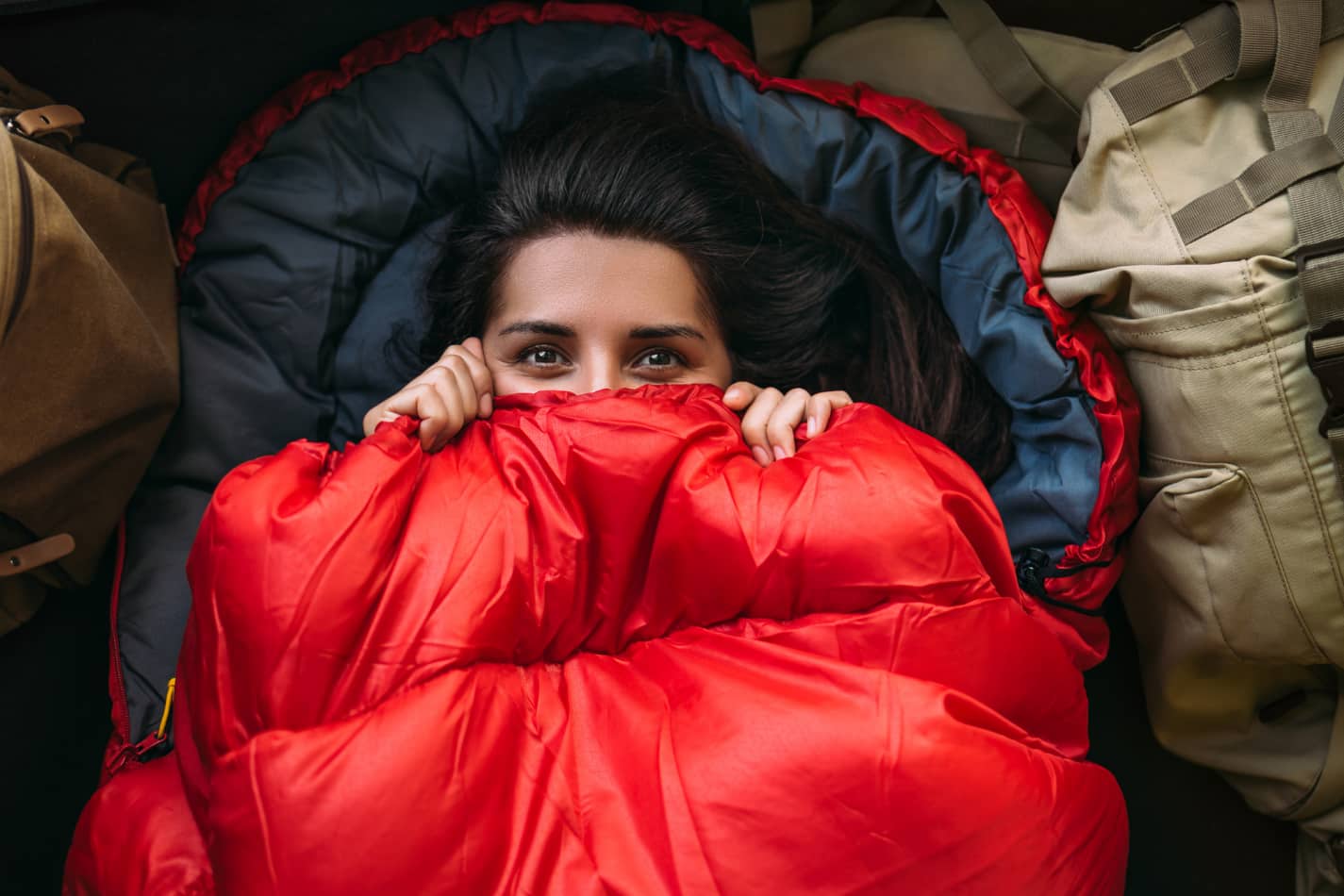
Your sleeping bag might be the most argued about but important pieces of gear in your pack. While your tent keeps the rain off and your shoes get you down the trail, your sleeping bag is what allows your body to stay warm and recover every night. After hiking 15 to 25 miles per day, you need quality sleep to do it all again tomorrow. And the next day. And for the next five months.
Why Sleeping Bags Matter on Long Trails
On a weekend trip, you can tough out a cold night or carry extra weight without major consequences. On a thru-hike, these small problems compound into trip-ending issues. A sleeping bag that is too cold means poor sleep, which leads to slower recovery, increased injury risk, and lower morale. A bag that is too heavy adds unnecessary strain to your body over millions of steps. Getting your sleeping bag choice right is non-negotiable.
Understanding Temperature Ratings
Every sleeping bag comes with temperature ratings, but these numbers are more complex than they appear. You will typically see two ratings: comfort rating and lower limit rating (sometimes called critical or survival rating).
The comfort rating is the temperature at which an average sleeper can expect a comfortable night’s sleep. This is your primary number. If you are hiking the Appalachian Trail and expect nighttime temperatures around 30°F in the Smokies, you want a bag with a comfort rating at or below 30°F.
The lower limit rating represents the temperature at which an average person can survive the night without hypothermia, but you will likely be cold and sleep poorly. Some manufacturers call this the survival rating. This is not the number you should base your purchase on.
Just because a bag has a lower limit of 20°F does not mean you will sleep comfortably at 20°F.
These ratings assume you are wearing long underwear and using a sleeping pad with adequate insulation. If you sleep cold naturally, consider choosing a bag rated at least 10 degrees lower than the temperatures you expect to encounter. If you sleep warm, you can sometimes get away with a bag rated closer to your expected low temperatures, though you can always vent a warmer bag by unzipping it.
Fill Power: What It Means and Why It Matters
Fill power is a measurement of down insulation quality, expressed as a number like 800, 900, or 950. Specifically, it measures how many cubic inches one ounce of down can fill. Higher fill power means better insulation per ounce of weight.
A higher fill power creates three major advantages for thru-hikers. First, the bag weighs less for the same warmth. An 800-fill power bag will be lighter than a 650-fill power bag with the same temperature rating. Second, higher fill power down compresses smaller, taking up less room in your pack. Third, higher quality down tends to be more durable and maintains its loft better over the thousands of stuffings and unpackings you will do on a thru-hike.
The tradeoff is cost. Higher fill power down is more expensive. However, for thru-hiking, the weight and packed size savings usually justify the extra expense. Most thru-hikers choose bags with 800-fill power or higher.
Fill power only applies to down insulation. Synthetic bags use different materials and do not have fill power ratings.
Down vs. Synthetic Insulation
Down insulation comes from duck or goose feathers and offers the best warmth-to-weight ratio available. Down compresses extremely small, lasts for many years with proper care, and feels comfortable against your skin. The major weakness of down is moisture. When down gets wet, it clumps together, loses its loft, and provides almost no insulation. On a thru-hike, you must keep your down bag dry by using a pack liner or dry bag.
Synthetic insulation is made from polyester fibers designed to mimic down. Synthetic bags are heavier and bulkier than down bags of equivalent warmth, and they do not last as long. The fibers break down faster with repeated compression. However, synthetic insulation continues to provide warmth even when wet, and synthetic bags dry much faster than down. Synthetic bags are also less expensive and easier to care for.
For most thru-hikers, down is the better choice because the weight savings matter enormously over long distances. Modern water-resistant down treatments provide additional protection against moisture. However, if you are hiking in consistently wet conditions like the Pacific Northwest or if budget is a major concern, synthetic can work.
Weight and Packed Size
For thru-hiking, every ounce counts. Your sleeping bag will likely be one of the three heaviest items in your pack, along with your tent and backpack itself. A good thru-hiking sleeping bag weighs between 16 to 28 ounces depending on its temperature rating.
Colder-rated bags require more insulation and therefore weigh more. A 10°F bag might weigh 28 ounces, while a 40°F bag might weigh just 16 ounces. You need to match your bag’s rating to the coldest temperatures you expect to encounter.
Packed size also matters because internal backpack volume is limited. Your sleeping bag will likely take up the bottom third of your pack. Down bags compress much smaller than synthetic bags, which is another reason most thru-hikers prefer down.
Sleeping Bag or Backpacking Quilt
You might have heard experienced hikers talk about quilts instead of sleeping bags. A backpacking quilt is essentially a sleeping bag without a back. The theory is that the insulation underneath you gets compressed by your body weight anyway, so why carry it? Quilts save weight by eliminating this unused insulation.
However, for beginners, sleeping bags are usually the better choice. Here’s why:
Sleeping bags are easier to use. You climb in and zip up. There is no learning curve. Quilts require you to manage straps and attachments to your sleeping pad, and they allow drafts if not used correctly.
Sleeping bags are more versatile. If you get too warm, unzip the bag. If you are freezing, cinch the hood tight. You can also use a sleeping bag as a blanket around camp. Quilts offer less flexibility.
Sleeping bags work better for active sleepers. If you toss and turn at night, a quilt can shift and create cold spots. A sleeping bag moves with you.
Once you have experience and understand your sleep system preferences, quilts can be excellent. But for your first thru-hike, a quality sleeping bag removes variables and ensures warm sleep.
Key Features to Look For
Beyond temperature rating and fill power, several features distinguish great thru-hiking sleeping bags from mediocre ones.
Look for a hood with a drawcord that cinches around your head. Significant heat escapes from your head, and a good hood prevents this.
A draft collar is a small insulated tube around the neck area that prevents warm air from escaping and cold air from entering when you move.
Anti-snag zippers matter because you will open and close your bag thousands of times. Quality zippers last longer and do not catch the fabric.
The shape of the bag affects warmth and weight. Mummy-shaped bags are narrower at the feet and taper toward the head, reducing weight and improving warmth by minimizing air space. Rectangular bags offer more room to move but are heavier and less efficient.
A stuff sack should come with your bag, but many thru-hikers replace it with a waterproof dry bag or pack liner for added protection.
Matching Your Bag to Your Trail
Different trails require different temperature ratings. The Appalachian Trail sees spring snow in the Smokies and cold nights in the northern states, suggesting a 20°F comfort rating. The Pacific Crest Trail includes the High Sierra and cold desert nights, also calling for a 20°F bag or slightly warmer. The Continental Divide Trail crosses high alpine terrain and requires a 10 to 15°F bag for most hikers.
If you are starting late in the season or hiking faster through cold sections, you can sometimes get away with a warmer-rated (less insulated) bag. Many hikers carry a 30°F bag and add a puffy jacket or fleece inside the bag on extra cold nights.
Final Thoughts on Sleeping Bags
Choosing your first thru-hiking sleeping bag comes down to understanding your needs and the conditions you will face. Prioritize the comfort temperature rating over the lower limit. Invest in higher fill power down if your budget allows. Keep weight and packed size reasonable for your base weight goals. And most importantly, choose a sleeping bag over a quilt for your first long trail.
The right sleeping bag transforms your thru-hike. Every morning you will wake up rested, warm, and ready for another big day on the trail. That daily recovery is what carries you from Georgia to Maine, from Mexico to Canada, or wherever your feet take you.