
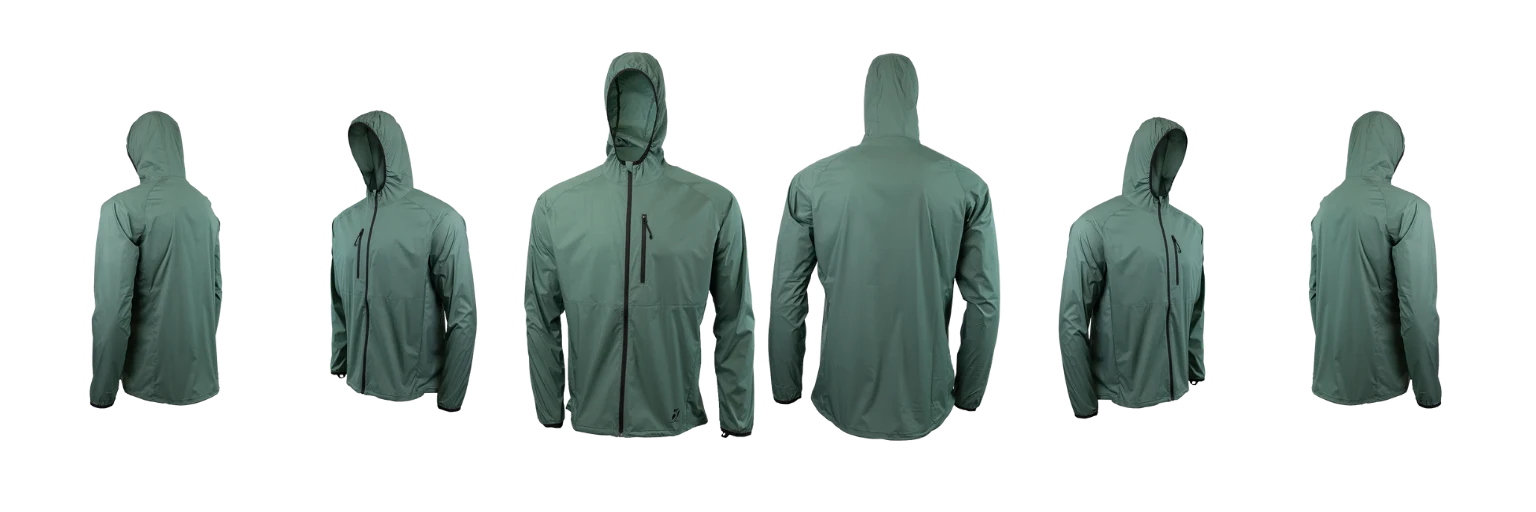
When you’re planning a thru-hike, the gear decisions feel endless. Every piece matters because you’ll be carrying it for thousands of miles. The windbreaker category often confuses new hikers because it seems like an optional item, but talk to anyone who has finished a long trail and they’ll tell you the truth: a good windbreaker is one of the most-used pieces in your pack.
The Outdoor Vitals Nebo Windbreaker sits in that sweet spot of being light enough to justify its place and functional enough to earn its keep. This isn’t a review with subjective opinions about colors or brand loyalty. This is a factual breakdown of what this jacket offers, how it performs, and whether it makes sense for someone planning their first long trail.
Understanding the Weight Game
The Nebo weighs just 4 ounces. For context, that’s roughly the weight of a standard energy bar or a small stuff sack. When you’re carrying everything you need for months on your back, four ounces doesn’t sound like much until you realize that every ounce compounds over millions of steps.
Most budget windbreakers come in around 6-8 ounces. Mid-range options sit at 5-6 ounces. High-end ultralight versions can hit 2-3 ounces but often sacrifice features or durability. At 4 ounces, the Nebo sits in the lighter half of the spectrum while maintaining features that actually matter on trail.
The weight to warmth ratio mentioned in the product details isn’t marketing speak. A windbreaker doesn’t generate warmth like insulation does. Instead, it traps your body heat by blocking wind. Wind chill can drop the effective temperature by 10-20 degrees. A 4-ounce jacket that negates that effect is pulling serious weight in your layering system.
Construction Reality Check
The Nebo uses 20 denier nylon fabric. Denier measures fiber thickness. For perspective, most standard backpacks use 200-500 denier fabric. Ultralight gear typically runs 7-30 denier. At 20D, this jacket sits in the middle of the ultralight range, which tells you something important: it’s built light but not fragile.
That said, 20D nylon isn’t going to shrug off everything. Bushwhacking through thorny sections will damage it. Rubbing against granite on scrambles will cause wear. Setting your pack down on rough ground repeatedly will eventually create weak points. This is the trade-off every thru-hiker makes. You can carry a heavier, more durable jacket that you’re less likely to use because it’s overkill, or you can carry something light that requires a bit more care.
The DWR (Durable Water Repellent) treatment deserves explanation because it’s often misunderstood. This is not waterproofing. DWR causes water to bead up and roll off the fabric surface rather than soaking in. In light rain or mist, this buys you time, maybe 15-30 minutes of protection. In sustained rain, you’re getting wet. The Nebo isn’t a rain jacket replacement. It’s a wind jacket that can handle brief moisture exposure.
DWR treatments wear off over time, especially with use and washing. You can reapply it with spray-on or wash-in treatments. On a thru-hike, expect the factory DWR to last a few hundred miles before it needs refreshing.
Features Breakdown
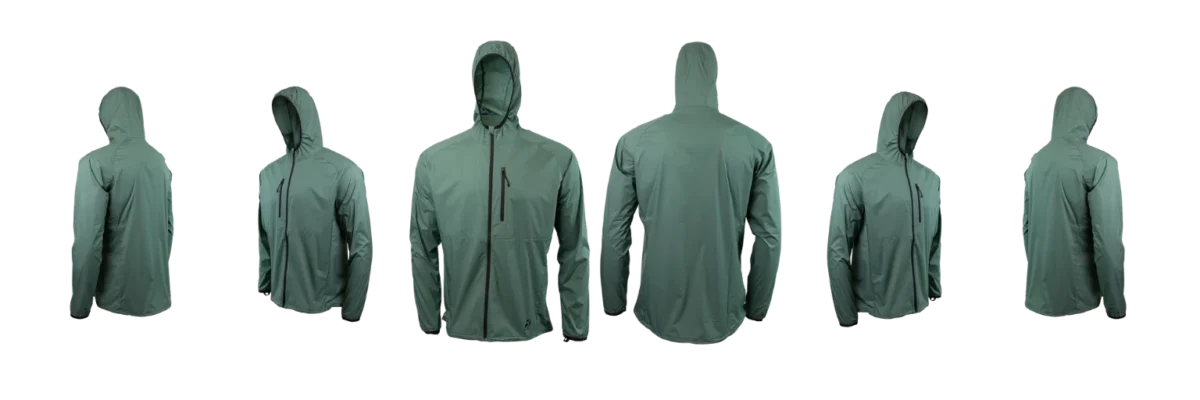
The hood on the OV Nebo Windbreaker is designed to fit close without being restrictive. It adjusts with a single rear pull cord. For thru-hikers, hood design matters because you need to be able to pull it on quickly when wind picks up or light rain starts. A hood that fits over a hat without being baggy is ideal. The Nebo’s hood fits this description based on the sizing, though men’s sizing runs true to size and women should size down.
The chest pocket is where most people stash their phone, snacks, or a map. The pocket on the Nebo zips and sits high enough that it doesn’t interfere with pack hip belts. This matters more than you’d think. A chest pocket that sits too low becomes unusable when you’re wearing a loaded pack.
The drop back hem is longer in the rear than the front. This prevents the jacket from riding up when you’re wearing a pack, which would otherwise expose your lower back to wind. Small detail, significant comfort improvement over hundreds of miles.
Thumb loops keep the sleeves in place and prevent them from riding up. When you’re moving fast in cold wind, exposed wrists are surprisingly miserable. Thumb loops solve this without requiring tight elastic cuffs that restrict circulation.
The hem adjustment uses a drawcord system that lets you cinch the bottom of the jacket. This prevents wind from blowing up underneath, which defeats the entire purpose of wearing a windbreaker. Being able to seal the bottom without fumbling with complicated adjustments is valuable when you’re trying to regulate temperature on the move.
How It Performs on Trail
Breathability is the make-or-break factor for active windbreakers. Cheap windbreakers turn into portable saunas because they trap all your moisture inside. The Nebo uses fabric that allows some vapor transmission while still blocking wind. In practice, this means you can hike uphill at a moderate pace without immediately turning into a sweat factory.
Understanding when to put on and take off your windbreaker is part of the learning curve on a thru-hike. You want it on before you get cold and off before you overheat. The Nebo’s breathability gives you a wider margin for error compared to less breathable options.
Wind blocking is the primary job. The Nebo’s fabric is tightly woven enough to stop wind effectively. On exposed ridges or during cold morning starts, putting on the Nebo can immediately make you feel 10-15 degrees warmer without adding insulation bulk.
The light rain performance is adequate for brief exposure. If you get caught in a 10-minute shower, you’ll stay mostly dry. If you’re hiking through steady rain, you’ll get wet, but the jacket will still block wind and provide some warmth even when damp. This is actually valuable because maintaining core temperature in wet conditions is critical.
Layering capability matters for shoulder season hiking or high elevation. The Nebo is cut loose enough to fit over a base layer and a lightweight fleece or puffy. This lets you build a versatile system rather than carrying a single heavy jacket that tries to do everything.
The Practical Stuff Nobody Mentions
Packing and compression: The Nebo stuffs down to roughly the size of a water bottle. It doesn’t have a stuff sack, which is fine because you can just shove it in any open space in your pack. It’s not so delicate that it needs special protection, and it’s not so bulky that it takes up valuable space.
Wearing with a pack: The cut allows for full range of arm motion without the jacket riding up or feeling restrictive. The fabric doesn’t make loud swishing sounds that drive you crazy after eight hours. These details matter on long days.
Cleaning on trail: You can hand wash the Nebo in a sink or stream with mild soap. It dries relatively fast, usually overnight if hung in a breeze. On a thru-hike, you’re not washing it daily, but being able to freshen it up every few weeks without special care is practical.
Longevity expectations: With reasonable care, expect the Nebo to last a full thru-hike. Small repairs with tenacious tape or patches are inevitable with ultralight gear. The seams and zippers are the weak points to watch. Quality construction here matters, and the Nebo uses standard YKK zippers and reinforced stress points.
The Bottom Line for Your Thru-Hike
At around $125 (less with membership pricing), the OV Nebo sits in the mid-range price category. You can find cheaper windbreakers, but they’ll likely be heavier or less durable. You can find lighter ones, but they’ll cost significantly more or sacrifice features.
The real question isn’t whether the Nebo is perfect. It’s whether it solves actual problems you’ll face on trail without creating new ones. A thru-hiker needs wind protection that doesn’t weigh much, packs small, breathes reasonably well, and survives daily use for months. The Nebo checks these boxes.
You’ll reach for this jacket more than almost any other piece in your pack. Morning cold snaps, windy ridge walks, cool evenings in camp, unexpected weather changes, and as an extra layer for warmth at night. The versatility means it justifies its pack space and weight.
For beginners planning a thru-hike, the Nebo represents a sensible choice. It’s not the absolute lightest option, but it’s light enough. It’s not the most durable option, but it’s durable enough. It’s not the cheapest option, but it’s priced fairly. Sometimes the best gear choice isn’t the most extreme option in any category, but rather the piece that balances multiple factors well enough to become genuinely useful.
That’s what the Nebo Windbreaker offers: practical, lightweight wind protection that you’ll actually use, which is ultimately what matters most when you’re hiking from Georgia to Maine or Mexico to Canada.