
This website uses affiliate links which may earn a commission at no additional cost to you. As an Amazon Associate I earn from qualifying purchases.
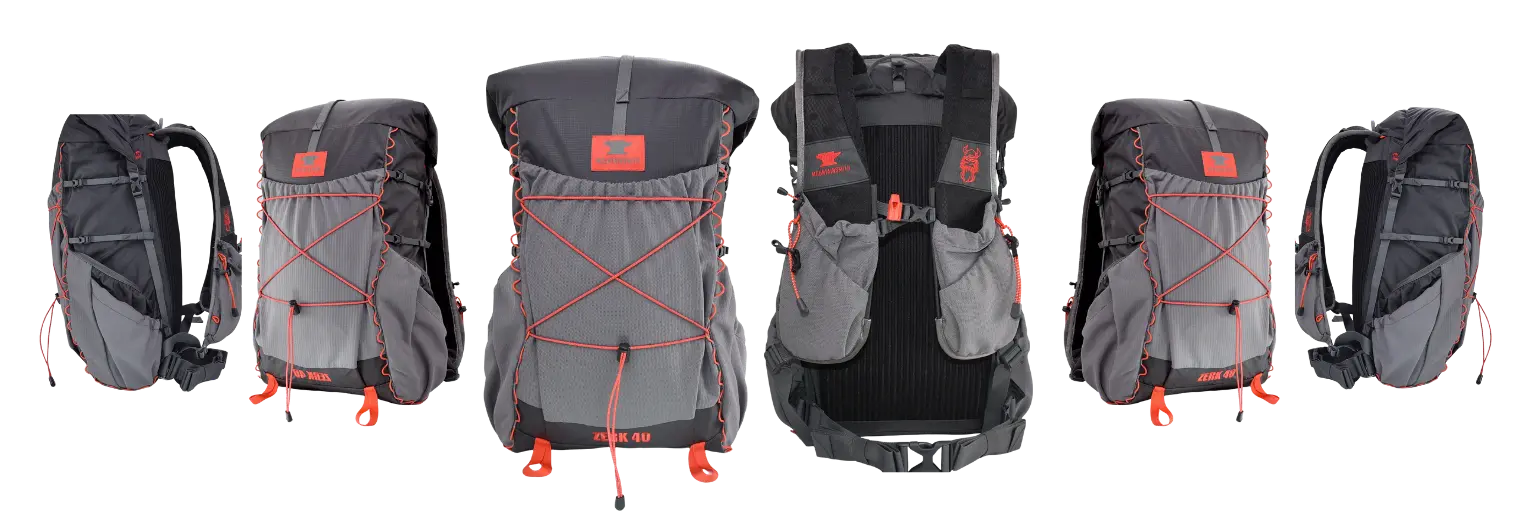
The Mountainsmith Zerk 40 occupies an unusual space between minimalist frameless packs and traditional backpacking packs. This guide breaks down the tangible realities of using the Zerk 40 on long trails, focusing on the practical considerations that matter when you are hundreds of miles into a thru-hike.
Weight: The Numbers That Actually Matter
The Zerk 40 weighs 1 pound 13 ounces (28 oz/794g) with all accessories. Remove the waist belt and bear canister straps, and you drop to 1 pound 11 ounces (25 oz/709g). That is 12 to 15 ounces lighter than traditional lightweight packs like the Granite Gear Crown2 60 or Osprey Exos 48.
This weight encourages you to refine your entire system. When your pack weighs under 2 pounds, you start questioning every other item. The pack becomes a forcing function for ultralight thinking.
The tradeoff is load capacity. This pack shines between 15 and 25 pounds total weight. Push past 25 pounds, and the lack of a substantial hip belt becomes noticeable. Your shoulders carry most of the load.
Internal Space: What Actually Fits
The main compartment holds 40 liters fully extended or 32 liters compressed. A typical five-day resupply with ultralight gear (shelter, 20-degree quilt, insulated jacket, rain gear, food, cook system, and essentials) fits comfortably at the 32-liter level.
What does NOT fit well: bear canisters (creates uncomfortable back pressure), bulky synthetic sleeping bags, traditional camping gear, or winter mountaineering equipment. The pack is purpose-built for compressible, lightweight gear. If your sleeping bag stuffs larger than a grapefruit, you will struggle.
Organization: Multiple Access Points
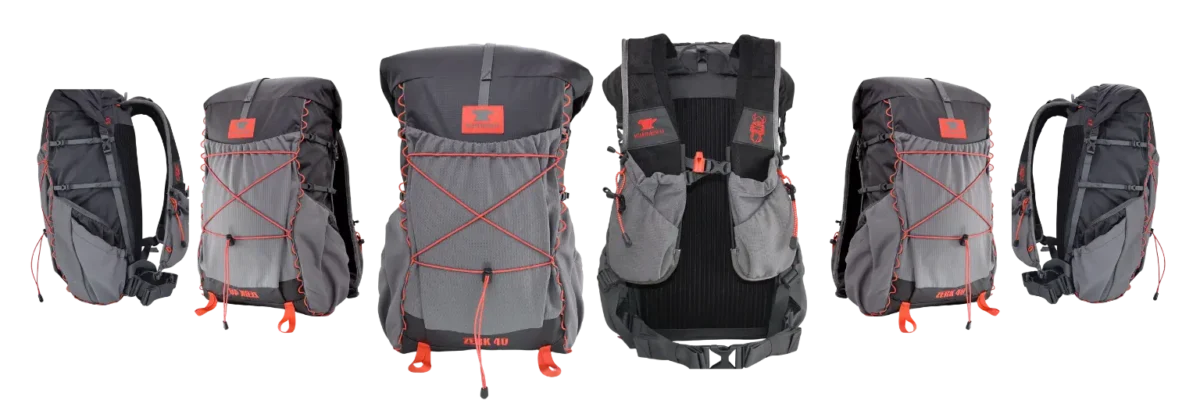
The Zerk 40 provides multiple external access points designed for grab-and-go efficiency rather than one giant stuff-sack compartment.
Side pocket system: Each side has dual pockets. The outer stretchy mesh pocket holds water bottles. The inner diagonal-cut zippered pocket protects phone, snacks, or maps. The angled opening makes these genuinely accessible while wearing the pack.
Shoulder strap pockets: Four total pockets (two per strap) give immediate access to phone, GPS, headlamp, lip balm, and sunscreen. These pockets fit modern smartphones with cases.
Front mesh pocket: A large, stretchy pocket handles bulky items like rain jackets, puffy layers, or damp tent flies. The elasticity keeps gear secure even when overstuffed.
Main compartment: Top-loading with a simple roll-top closure. No zippers, no brain pocket. This design forces strategic packing: camp items first (shelter, sleeping system), then clothes and food higher for easier access.
Comfort: Running Vest Philosophy
The Zerk 40 borrows from ultrarunning vest design. The shoulder straps are wide, thickly padded, and ergonomically shaped, wrapping around your torso to distribute weight across a larger surface area.
The Zerk 40 has only a minimalist webbing waist strap (removable, non-load-bearing). Your shoulders and upper back do all the work. The wide straps prevent the cutting sensation from narrow straps under load. The close fit reduces bounce and sway on uneven terrain.
A removable foam panel (Atilon EVA) provides structure without a traditional frame. This panel is notably stiffer than thin foam in many frameless packs, creating airflow while preventing gear from poking your spine. The stiffness helps with loads in the 20 to 25-pound range.
Users report wearing the pack comfortably for 10+ hour days at typical thru-hiking weights. The design assumes you keep the pack on all day, minimizing stops. The limitation: if you regularly carry 30+ pounds, you need a pack with a proper hip belt and frame.
Durability: Materials and Weak Points
The 2024 version uses 210-denier EXTREEMA recycled nylon ripstop with UHMPE (Dyneema/Spectra). The bottom uses 210-denier nylon SD oxford for abrasion resistance. This is thicker than many ultralight packs (100 to 150-denier), providing better resistance to punctures. The ripstop weave prevents small holes from becoming large tears.
Potential weak points: The stretch mesh panels on side pockets can develop small tears after heavy use, particularly at bottom corners. The SR buckles on the roll-top are bomber hardware, but check fabric at attachment points for fraying after several hundred openings.
Users completing thru-hikes report the pack holding up well through 2,000+ mile journeys. Expect cosmetic wear but solid structural integrity. This pack handles bushwhacking, talus fields, and general trail abuse.
Using the Pack Effectively
Roll-top closure: Two SR buckles clip together at the top or to side daisy chains. For maximum compression, roll the top tight and clip buckles to side attachment points. For easier access, roll once or twice and clip buckles together over the top.
Compression strategy: Side compression straps run the full pack height. Use these aggressively to bring the load closer to your back, improving stability and reducing sway.
Hydration setup: An internal sleeve and port accommodate bladder systems. Many thru-hikers skip the bladder and use side pockets for water bottles (easier to refill, monitor levels, and clean). If using a bladder, 2.5-liter capacity works well without adding excessive weight.
Maintenance and Care
Routine care: Brush off mud and dust after dirty sections. The mesh pockets collect debris, so turn the pack upside down and shake it out every few days.
Deep cleaning: Hand wash with mild soap and lukewarm water. Focus on shoulder straps and waist belt (they absorb sweat and oils). Rinse thoroughly and air dry. Never use a dryer or direct heat.
Inspect regularly: Check mesh pockets for small tears at stress points. Repair early with tenacious tape or stitching. Check roll-top attachment points for fabric wear. The #5 YKK zippers on internal side pockets need occasional cleaning and lubricant.
Storage: Store loosely stuffed or hanging, never compressed. This preserves shoulder strap padding loft and prevents permanent creasing in the foam back panel.
Real Trail Performance
The 40-liter capacity supports 5 to 7 days between resupplies, assuming 1.5 pounds of food per day and lightweight gear. The limitation is often water capacity rather than volume. In dry sections requiring 4+ liters of water, that additional weight pushes toward the upper limit of comfortable carry.
The pack design encourages faster hiking. Water, snacks, navigation tools, and layers are immediately accessible, meaning fewer breaks and more miles per day. Users report averaging 25+ mile days comfortably versus 18 to 22 miles with heavier packs.
The close fit and compression make this pack excel on technical terrain. Scrambling over boulders, navigating blowdowns, or moving quickly on steep descents feel more controlled than with taller, bulkier packs.
The pack has no built-in rain cover. The roll-top keeps rain out of the main compartment reasonably well, but side pockets and front mesh are exposed. Keep critical items (electronics, dry clothing) in the main compartment or in dry bags. The front mesh pocket excels at drying damp gear while you hike.
When This Pack Makes Sense
Consider the Zerk 40 if:
- Your base weight is under 10 pounds
- You thrive on high-mileage days
- You resupply every 5 to 7 days maximum
- You value quick access over maximum organization
- You prefer moving fast over carrying comfort items
Skip this pack if:
- You regularly carry bear canisters
- Your base weight exceeds 12 pounds
- You need to carry more than 25 pounds total
- You prefer traditional hip belt load transfer
- You want a pack for both weekend trips and winter mountaineering
The Bottom Line
The Mountainsmith Zerk 40 succeeds because it commits fully to a specific philosophy: fast, efficient, long-distance hiking. The weight savings are real. The accessibility is genuinely useful. The durability exceeds typical ultralight packs. But these advantages only matter if you accept the constraints: moderate volume, shoulder-based carry, and a commitment to keeping your gear list tight.
For thru-hikers who have already optimized their systems and want a pack that supports fast movement rather than hauling capability, the Zerk 40 delivers. It removes excuses and complexity. What remains is you, the trail, and enough capacity to keep moving.