
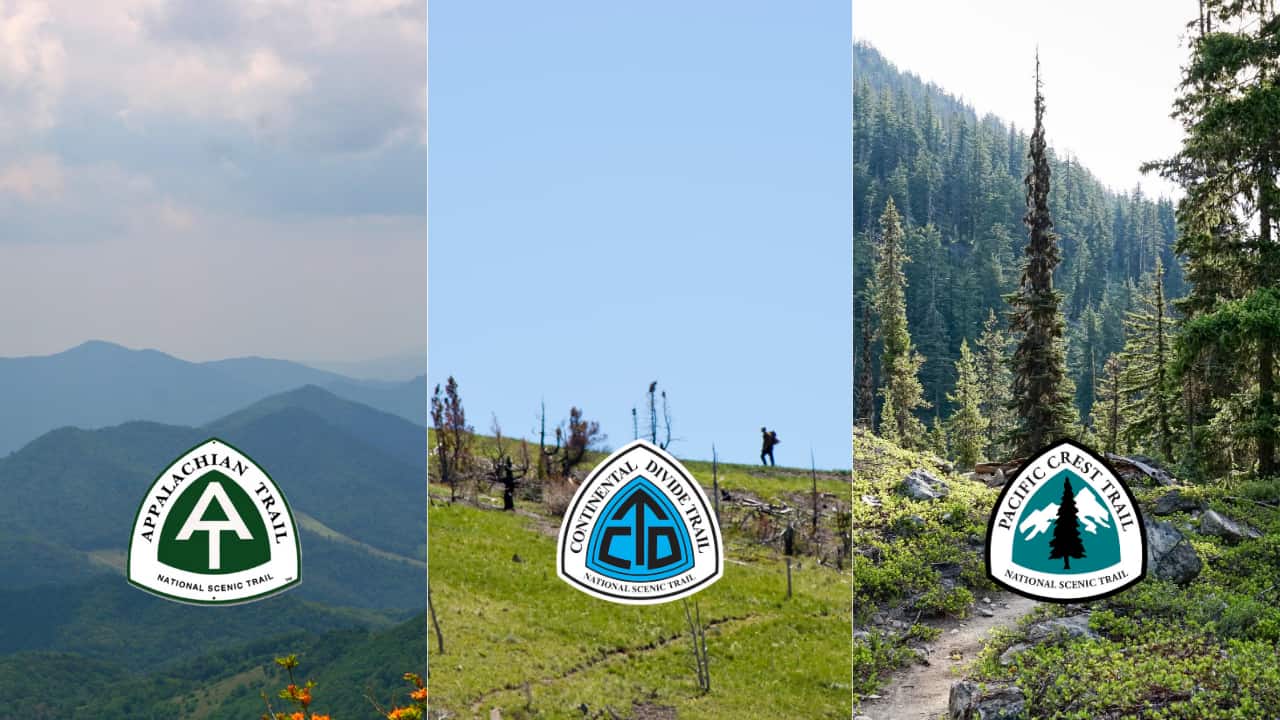
If you’re new to the world of thru-hiking, you’ve likely heard whispers of the Triple Crown, a legendary achievement that represents the pinnacle of long-distance hiking in the United States. But what exactly is it, and what does it take to earn this prestigious title? Let’s break down everything you need to know about this remarkable accomplishment.
What is the Triple Crown?
The Triple Crown of Hiking consists of completing all three of America’s longest and most iconic National Scenic Trails: the Appalachian Trail (AT), the Pacific Crest Trail (PCT), and the Continental Divide Trail (CDT). When a hiker successfully completes all three trails, they earn the title of Triple Crowner, joining an exclusive community of adventurers who have conquered over 7,900 miles of some of the most challenging and beautiful terrain North America has to offer.
Unlike many outdoor achievements, there’s no official governing body that certifies Triple Crowners, no medals or certificates. The honor is largely self-reported and community-recognized, built on trust and the shared understanding of what these trails demand. It’s a personal milestone that speaks to dedication, perseverance, and a deep love for wilderness exploration.
The Three Trails Explained
The Appalachian Trail (AT) stretches approximately 2,190 miles from Springer Mountain in Georgia to Mount Katahdin in Maine. It’s the oldest and most hiked of the three, established in 1937. The AT winds through 14 states, offering lush forests, rocky scrambles, and a well-established trail culture complete with shelters, hostels, and a supportive hiking community. Most thru-hikers tackle the AT northbound (NOBO) starting in spring, though southbound (SOBO) routes are also popular.
The Pacific Crest Trail (PCT) runs roughly 2,650 miles from the Mexican border in California to the Canadian border in Washington. This trail showcases the dramatic diversity of the American West, from the scorching Mojave Desert to the snow-capped Sierra Nevada and the volcanic peaks of the Cascade Range. The PCT is generally considered to have more consistent terrain than the AT, with longer stretches between resupply points and stunning alpine scenery that draws hikers from around the world.
The Continental Divide Trail (CDT) is the wild card of the Triple Crown, spanning approximately 3,100 miles along the Continental Divide from Mexico to Canada through New Mexico, Colorado, Wyoming, Idaho, and Montana. The CDT is the least developed and most challenging of the three, with significant sections of unmarked trail, multiple route options, and extreme exposure to weather. It requires superior navigation skills, self-reliance, and the ability to handle unpredictable conditions.
What Does It Take to Become a Triple Crowner?
Completing the Triple Crown isn’t just about walking a very long distance, though that’s certainly part of it. Here’s what aspiring Triple Crowners need to consider:
Time Commitment: Each trail typically takes four to six months to complete. Most hikers tackle them over multiple years, though some ambitious souls attempt the Calendar Year Triple Crown (more on that later). You’re looking at 12-18 months of actual hiking time, not counting preparation, recovery, and logistics between trails.
Physical Preparation: You don’t need to be a professional athlete, but you do need a solid fitness foundation. Most successful thru-hikers start their first trail in decent shape and let the trail itself get them “trail fit.” However, understanding your body’s limits, preventing injuries, and building mental resilience are crucial for completing all three trails.
Financial Resources: Thru-hiking isn’t cheap. Each trail can cost anywhere from $3,000 to $6,000 or more, depending on your hiking style. This includes gear, food, resupply boxes, lodging in trail towns, transportation, and emergency expenses. Triple Crowners need to budget for three separate adventures, which can total $15,000-$20,000 or more.
Logistical Planning: Each trail has its own optimal hiking season, permit requirements, resupply strategies, and potential challenges. The AT is typically hiked March through September, the PCT from April through October, and the CDT from late April through September or October. You’ll need to master the art of resupplying, navigating permit systems, and adapting to wildly different trail conditions.
Mental Fortitude: Perhaps the most important requirement is mental toughness. You’ll face loneliness, physical discomfort, fear, doubt, and the daily question of “why am I doing this?” The ability to push through difficult moments and maintain your motivation across thousands of miles is what separates those who finish from those who don’t.
How Many People Have Completed the Triple Crown?
The Triple Crown remains a relatively rare achievement. As of recent estimates, fewer than 500 people have verifiably completed all three trails, though exact numbers are difficult to confirm due to the self-reported nature of the accomplishment. The Appalachian Trail Conservancy estimates over 20,000 people have completed the AT alone, which puts the Triple Crown completion rate in perspective.
The first recognized Triple Crowner was Eric Ryback, who completed all three trails between 1969 and 1971, though his AT completion has been disputed. The achievement gained more recognition through the 1990s and 2000s as thru-hiking culture grew and the trails became more established.
The Calendar Year Triple Crown
For the truly ambitious, there’s an even more extreme version: the Calendar Year Triple Crown (CYTC). This means completing all three trails, all 7,900+ miles, within a single calendar year from January 1 to December 31.
This feat requires exceptional planning, near-perfect health, favorable weather conditions, and the ability to hike at a pace that would exhaust most people. Hikers attempting the CYTC typically start with the AT or PCT in early spring, immediately flip to another trail upon completion, and finish with whichever trail remains, often racing against winter weather.
As of recent counts, fewer than 50 people have successfully completed the Calendar Year Triple Crown, making it one of the rarest achievements in outdoor recreation. Some years, weather conditions make it nearly impossible.
Why Pursue the Triple Crown?
For many hikers, the Triple Crown represents the ultimate expression of their passion for long-distance hiking. Each trail offers unique challenges, ecosystems, and communities. The AT provides camaraderie and tradition, the PCT delivers jaw-dropping scenery and desert endurance tests, and the CDT demands self-sufficiency and navigational prowess.
Completing all three creates a comprehensive understanding of American wilderness, from the eastern deciduous forests to western deserts and alpine environments. It’s a transformative experience that changes how you see yourself, nature, and your capabilities.
Getting Started
If the Triple Crown sounds appealing, the best advice is simple: start with one trail. Research which trail appeals to you most based on your preferences, timeline, and comfort level. The AT is often recommended for beginners due to its established infrastructure and supportive community, but there’s no wrong choice.
Join online communities, read trail journals, invest in quality gear, and most importantly, get out and hike. The Triple Crown might seem impossibly distant from your first day on the trail, but every Triple Crowner started exactly where you are now; with curiosity, excitement, and that first step into the wilderness.
The trails are waiting. Your Triple Crown journey can begin whenever you’re ready.