
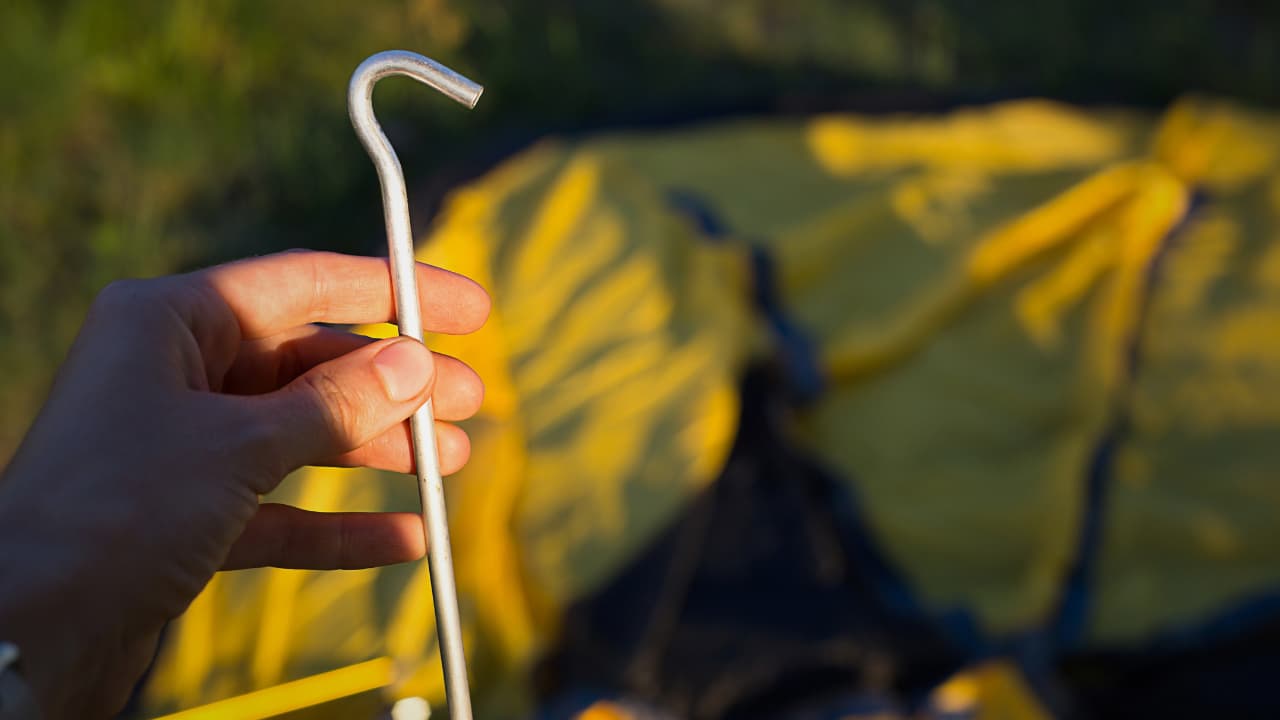
When you’re planning your first thru-hike, tent stakes might seem like an afterthought. They’re small, they come with your shelter, so why worry about them? But after a few hundred miles on trail, you’ll quickly learn that proper tent stakes can mean the difference between a restful night and a miserable one. Let’s break down everything you need to know about these essential pieces of gear.
What Are Tent Stakes?
Tent stakes are anchoring devices that secure your shelter to the ground. They push or screw into the soil, sand, or snow, holding down your tent’s guy lines and corners to keep it taut and stable. Without them, even a light breeze could turn your shelter into a deflated balloon, and a real storm could send it tumbling down the trail without you.
Most tents and tarps come with basic stakes included, but serious thru-hikers often replace these stock stakes with options better suited to their needs. The stakes that come in the box are typically heavy, designed to work in average conditions, and built to a price point rather than for performance on a 2,000-mile journey.
Why Tent Stakes Matter on a Thru-Hike
On a thru-hike, you’ll be setting up camp nearly every single night for months. That’s 150+ nights on the Appalachian Trail or Pacific Crest Trail. Your stakes need to be reliable, lightweight, and versatile because you’ll encounter every type of terrain imaginable.
Rocky New England soil, soft desert sand, dense Smoky Mountain clay, and soggy Pacific Northwest ground all require different holding power. Poor stakes mean sagging shelters, midnight adjustments in the rain, and the genuine risk of your tent failing in severe weather. Good stakes disappear into your routine because they simply work every time.
Types of Tent Stakes
Understanding the different stake designs helps you choose the right ones for your hike and the conditions you’ll face.
Shepherd’s Hook Stakes (also called J-stakes) are the most basic design. These are the wire stakes with a hook on top that often come with budget tents. They’re inexpensive and work fine in soft ground, but they bend easily, offer poor holding power in hard soil or sand, and are relatively heavy for their performance. Most thru-hikers upgrade from these immediately.
V-Stakes or Y-Stakes feature an angled profile that provides significantly better holding power than shepherd’s hooks. The V-shaped or Y-shaped cross-section gives them strength and helps them resist bending. These are lightweight and work well in most conditions, making them a popular choice for thru-hikers. They can be made from aluminum or titanium, with titanium versions being lighter but more expensive.
Needle Stakes are ultra-thin, round-profile stakes made from strong materials like titanium or carbon fiber. They’re extremely lightweight, making them favorites among ultralight backpackers. However, their thin profile means less holding power in loose soil or sand, and they can be difficult to remove from hard ground. They excel in firm soil where you can get a solid placement.
MSR Groundhog Stakes are considered by many to be the gold standard for all-around performance. These Y-shaped stakes feature a wider profile with a notched design that grips soil exceptionally well. They’re strong, resist bending, work in varied terrain, and are easy to place and remove. The trade-off is weight, as they’re heavier than needle or basic Y-stakes.
Snow or Sand Stakes are specialized wide-surface designs that won’t pull out of loose material. Most thru-hikers won’t need these unless hiking in winter conditions or coastal areas, but they’re essential when required.
Materials That Matter
The material your stakes are made from affects both weight and durability.
Aluminum stakes offer the best balance of weight, strength, and cost for most hikers. They’re strong enough for typical conditions, reasonably lightweight, and affordable enough that losing one won’t break the bank. Quality aluminum stakes resist bending in normal use and will last an entire thru-hike.
Titanium stakes are lighter than aluminum and incredibly strong for their weight. They’re the choice for weight-conscious hikers willing to pay a premium. A titanium stake weighs roughly half what an equivalent aluminum stake does, which adds up when you’re carrying 6 to 8 stakes. The downside is cost, as titanium stakes can be three to four times more expensive.
Carbon fiber stakes push the weight savings even further but are more brittle. They can snap under side loads or if you hit a rock while hammering them in. These are for experienced ultralight hikers who understand the trade-offs.
How Many Stakes Do You Need?
Most thru-hikers carry 6 to 8 stakes, though the exact number depends on your shelter design. A trekking pole tent with four corner tie-outs and four guy lines requires eight stakes for full stability, but you might get by with six in calm conditions by only using the essential anchor points.
Many hikers carry a mix of stake types: heavier, stronger stakes for the critical corner points and lighter stakes for secondary guy lines. This strategy balances security with weight savings.
Always carry at least two spare stakes beyond your minimum. You will lose stakes on trail. You’ll pull one out at 6 AM in a groggy stupor, it’ll fly into the bushes, and you’ll never see it again. You’ll also bend stakes, especially in rocky terrain. Having spares means you’re not compromising your shelter security or making an emergency gear store run in the next trail town.
Choosing Stakes for Your Thru-Hike
Consider the trail you’re hiking. The Appalachian Trail features rocky, root-filled soil where strong stakes are essential. The Pacific Crest Trail includes desert sand, Sierra granite, and Pacific Northwest soil, demanding versatility. The Continental Divide Trail adds high-altitude exposure where stakes must hold in fierce winds.
For most thru-hikers, a set of 6 to 8 aluminum or titanium Y-stakes or V-stakes provides the best combination of reliability, weight, and cost. MSR Groundhogs are excellent if you don’t mind carrying a few extra ounces. Ultralight hikers on established trails might choose needle stakes to save weight.
Weight per stake matters significantly when multiplied by 6 to 8 stakes. A difference of 0.3 ounces per stake means 2.4 ounces saved with eight stakes, which is substantial in the ultralight world.
Using Your Stakes Effectively
Even the best stakes fail if used improperly. Always stake at a 45 to 60-degree angle away from the tent, which maximizes holding power. Push or hammer stakes until just the top loop or hook is visible. In loose soil, crossing two stakes in an X-pattern at critical points provides extra security.
Use a rock to hammer stakes rather than your hand or boot, which can bend stakes or hurt you. When removing stakes, pull straight out along the angle they entered, not straight up, which can bend them. Clean mud off stakes before packing them so they don’t add unnecessary weight or make a mess in your pack.
Final Thoughts
Tent stakes are small pieces of gear that play an oversized role in your thru-hiking experience. Investing in quality stakes suited to your trail and shelter means better sleep, less nighttime anxiety during storms, and one less thing to worry about over thousands of miles. Take the time to choose wisely, carry spares, and learn to place them properly. Your future self, sleeping soundly through a mountain storm, will thank you.