
When you’re planning your first thru-hike, the rain jacket decision feels impossibly complex. Too light and it shreds in a week. Too heavy and you’ll curse every uphill mile. Too cheap and you’re soaked by lunch. Too expensive and you’re eating ramen for months. The Outdoor Vitals Tushar Rain Jacket sits in an interesting middle ground that deserves a closer look, especially if you’re new to long-distance hiking and trying to make smart choices without emptying your bank account.
What the Weight Really Means
The Tushar doesn’t advertise a specific weight on the product page, which is telling in itself. This isn’t an ultralight jacket chasing the sub-6-ounce category where every gram matters and compromises are unavoidable. Instead, it positions itself as a durable lightweight option, likely landing somewhere in the 8 to 10-ounce range based on similar jackets with body-mapped fabrics.
For a thru-hiker, those extra ounces translate to something tangible: a jacket you won’t replace halfway through your hike. The ultralight jackets that clock in at 5 or 6 ounces often use delicate fabrics that can’t handle the daily grind of a 2,000-mile journey. You’ll save 3 ounces on your base weight but spend $300 replacing torn jackets. The Tushar’s weight philosophy makes sense for beginners who need gear that forgives mistakes and survives the learning curve.
Durability That Actually Matters
Outdoor Vitals makes a bold claim: their fabric passed a 10-year jungle test with no degradation. Strip away the marketing language and this tells you something useful. The fabric and seams can handle constant moisture, UV exposure, abrasion, and temperature swings without falling apart. On a thru-hike, your rain jacket gets stuffed into your pack wet, pulled out in a hurry, worn while scrambling over rocks, and compressed under your hip belt thousands of times.
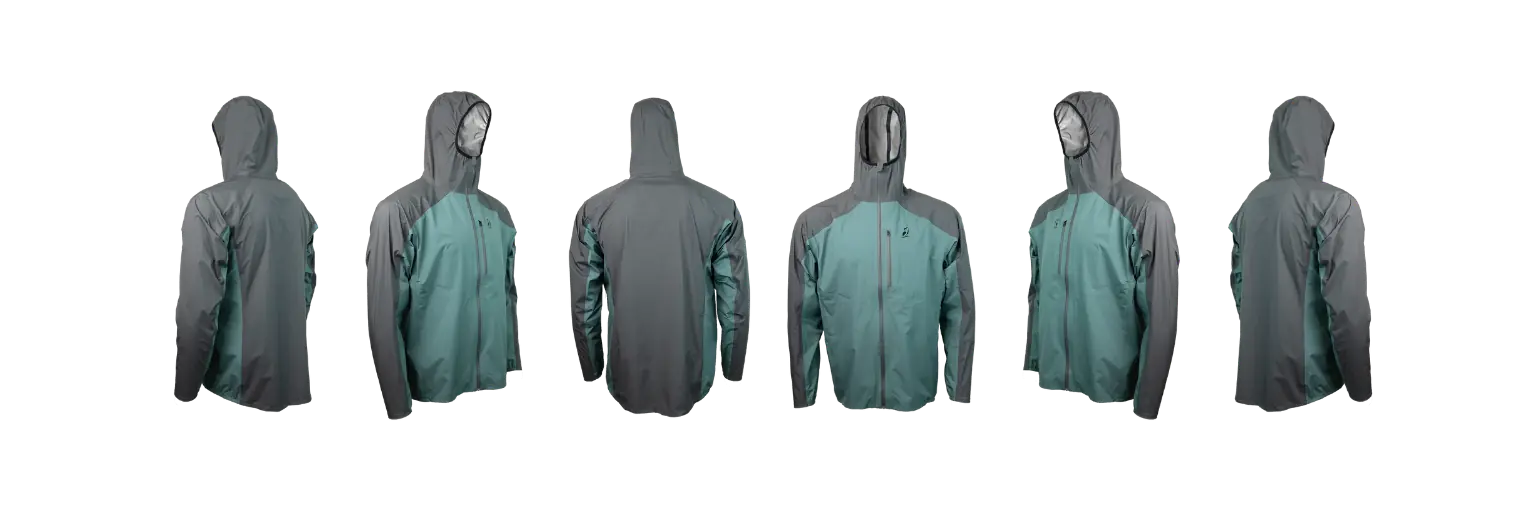
The body-mapped fabric technology addresses a specific problem that destroys most rain jackets: the shoulder and upper back areas where your pack straps create constant friction and pressure. The Tushar uses more durable fabric in these high-wear zones while maintaining lighter, more breathable material in your torso and underarms. This isn’t just clever engineering, it’s practical problem-solving for the exact conditions you’ll face on trail.
Most rain jackets fail at predictable points. Seams separate. Fabric delaminates where the waterproof coating bonds to the base material. The areas under pack straps wear through. The Tushar’s design specifically reinforces these failure points, which means you’re less likely to be jury-rigging repairs with duct tape in a trail town.
Staying Dry Without Cooking Yourself
Waterproofing is only half the equation. The other half is managing the sweat you generate while hiking uphill in rain gear, and this is where many jackets fail spectacularly. You stay dry from the rain but end up soaked from the inside.
The Tushar uses Torain waterproof technology, which handles moisture from both directions. The specific breathability rating isn’t listed, but the combination of breathable torso fabric and functional pit zips suggests Outdoor Vitals understands the reality of wearing rain gear during active hiking. Those underarm vents aren’t cosmetic. On a humid day when it’s 60 degrees and raining, you’ll have those zippers open while you’re moving and closed when you stop for breaks.
The body-mapped approach means the fabric against your back and chest breathes better than the reinforced shoulder areas. You’re making a reasonable compromise: maximum protection where your pack sits, maximum breathability where you generate the most heat. For all-day rain events, which are common on trails like the AT or PCT, this balance keeps you functional instead of miserable.
Fit, Layers, and Your Pack
The sizing guidance on the Tushar is straightforward: this jacket is designed as an outer layer with room for insulation underneath. Women should size down from their usual size. If your high hip measurement exceeds your chest measurement, size up. This is practical advice that prevents the frustration of ordering gear that doesn’t fit your body or your layering system.
On a thru-hike, you need a rain jacket that fits over your midweight fleece or puffy jacket during cold, wet weather. The Tushar’s relaxed fit accommodates this without being so baggy that wind catches underneath and chills you. The sleeve length is designed for extended arms, which matters when you’re trekking with poles or scrambling.
The hip belt compatibility is crucial and often overlooked. Many rain jackets bunch up or ride up when you cinch your pack’s hip belt, creating gaps where rain runs down your back or exposing your base layers. The Tushar’s cut and length work with a loaded pack, keeping you covered where it matters. The reinforced fabric in pressure zones also means your hip belt won’t abrade through the jacket material over hundreds of miles.
Packing It Away and Getting It Out Fast
A rain jacket lives in your pack most of the time, coming out when weather turns or staying out during multi-day storm systems. Packability determines whether it takes up half your pack or stuffs into a corner, and accessibility determines whether you can get it on before you’re soaked.
The Tushar compresses reasonably well for its durability class. It won’t pack down as small as those fragile ultralight options, but it stuffs into a manageable bundle that fits in a side pocket or top lid. More importantly, you can pull it out, shake it out, and put it on without careful unfolding. When you see dark clouds rolling in and feel the first drops, you want a jacket you can deploy in 30 seconds, not one that requires a careful origami session.
Keeping it accessible matters too. Many thru-hikers stash their rain jacket in an outer pocket or strapped to their pack’s exterior during questionable weather. The Tushar’s durability means you can treat it a bit roughly without worrying that a snag will create a permanent leak.
Maintenance on a Six-Month Hike
Trail maintenance is different from home maintenance. You can’t carefully wash and re-proof your jacket every few weeks. You’re more likely to rinse it in a stream, let it dry on your pack, and hope for the best until you reach a town with a laundromat.
The waterproof coating will degrade over time, especially with pack wear and body oils. The product page mentions Nikwax TX Direct for re-waterproofing, which is the right recommendation. In town, you can throw the jacket in a washing machine with Nikwax Wash-In, or use the spray version on high-wear areas. This kind of maintenance extends the jacket’s effective life considerably and is simple enough to do every few weeks on trail.
The seam taping visible in the product photos shows fully taped seams, which means you won’t have seam failures in the field. When seams aren’t properly sealed, water seeps through the stitch holes. Taped seams eliminate this problem, but they can eventually peel or separate with hard use. Checking seam integrity in town and carrying a small amount of seam sealer for field repairs is wise.
The Money Question
At $220 standard price or $198 with membership, the Tushar sits between budget jackets that won’t survive a thru-hike and premium options that cost $400 or more. For a beginner planning a thru-hike, this price point makes sense as a one-hike investment rather than a lifetime purchase or a disposable gamble.
Consider the cost-per-mile perspective. If the Tushar lasts 2,000 miles without replacement, you’re paying about 10 cents per mile for reliable rain protection. Compare that to buying two or three cheaper jackets during your hike, or investing in a $450 jacket that offers marginal improvements for beginners who are still learning what they actually need.
The membership pricing option drops the cost by $22 and includes 10 percent off future orders. If you’re buying other gear from Outdoor Vitals, the membership pays for itself quickly. For a first-time thru-hiker assembling a complete kit, this bundling strategy can save significant money.
Who This Jacket Actually Serves
The Tushar makes the most sense for thru-hikers who prioritize reliability over absolute minimum weight. If you’re chasing a sub-8-pound base weight and willing to accept durability compromises, you’ll want something lighter. If you’re willing to carry a few extra ounces for gear that handles mistakes and abuse, the Tushar fits.
It’s particularly appropriate for hikers on their first long trail who don’t yet know their exact preferences and tolerances. You haven’t learned whether you’re someone who hikes through light rain in a wind shirt or someone who reaches for full rain gear at the first drop. The Tushar has enough versatility through its ventilation options and breathability to work for different hiking styles.
It’s less ideal for hikers in consistently dry climates where rain gear is emergency-only equipment. If you’re hiking the Arizona Trail and expect to use your jacket five times in five months, a more packable option makes sense. The Tushar is built for trails where rain is frequent and prolonged, where your jacket is a tool you use regularly rather than insurance you carry.
The body-mapped design and reinforced wear zones specifically address pack-heavy hiking, making this more suitable for hikers carrying traditional loads rather than ultralight minimalists with 15-pound packs. If you’re carrying 25 to 35 pounds and hiking in variable weather, the Tushar’s engineering priorities align with your needs.
Making the Decision
Choosing gear for a thru-hike means balancing competing priorities: weight against durability, breathability against waterproofing, cost against longevity. The OV Tushar Rain Jacket doesn’t win any single category, but it offers a thoughtful compromise across all of them. It’s light enough to not burden you, tough enough to finish your hike, breathable enough for active use, and priced reasonably for most budgets.
For a beginner thru-hiker, that combination of attributes matters more than excelling in one area while failing in others. You want gear that works consistently, forgives your learning curve, and doesn’t require replacement when you’re a thousand miles from anywhere. The Tushar delivers on those practical requirements without requiring you to second-guess every decision or empty your savings account.
Your rain jacket will become one of your most-used pieces of gear. Choose something that matches your actual hiking reality rather than an idealized version of yourself. If that means a few extra ounces for reliable performance and durability, the Tushar makes a sensible choice.