
This website uses affiliate links which may earn a commission at no additional cost to you. As an Amazon Associate I earn from qualifying purchases.
If you’re planning your first thru-hike, you’ve probably discovered that sleeping systems consume a massive chunk of your research time. The Nemo Pulse keeps coming up in forums and gear lists, but most reviews don’t answer the questions you actually have when you’re standing in a shop or scrolling through your cart at 2am.
This isn’t a review. This is the practical information you need to decide if this quilt belongs on your back for 2,000+ miles.
What You’re Actually Carrying
The Nemo Pulse quilt in regular length weighs 24 ounces. That’s a pound and a half. For context, many traditional sleeping bags in this temperature range sit between 28 and 36 ounces.
Packed size is where quilts shine. The Pulse compresses down to roughly the size of a 32oz water bottle, maybe 7 inches in diameter and 12 inches tall when properly compressed. In your pack, this means it can nestle into the bottom without dominating your entire main compartment. If you’re using a 50L pack (common for thru-hikers), this quilt won’t force you into a bigger pack just to accommodate it.
Why does this matter? Every ounce counts when you’re walking 15 to 25 miles a day. Shaving four to twelve ounces off your sleep system means less stress on your joints, less fatigue at the end of big days, and more energy for the actual hiking. The weight savings compared to traditional bags is one of the main reasons thru-hikers switch to quilts.
Setting It Up (And Taking It Down)
Here’s what happens at camp: you lay the Pulse flat on your sleeping pad, thread the pad attachment straps through your pad’s attachment points or around the pad itself, and clip them. The whole process takes about 30 seconds once you’ve done it a few times.
The Pulse uses a simple strap and buckle system rather than elastic cords or complicated clips. This is actually good news for tired hands at the end of a long day. You’re not fighting with finicky hardware or trying to thread tiny shock cords in the dark.
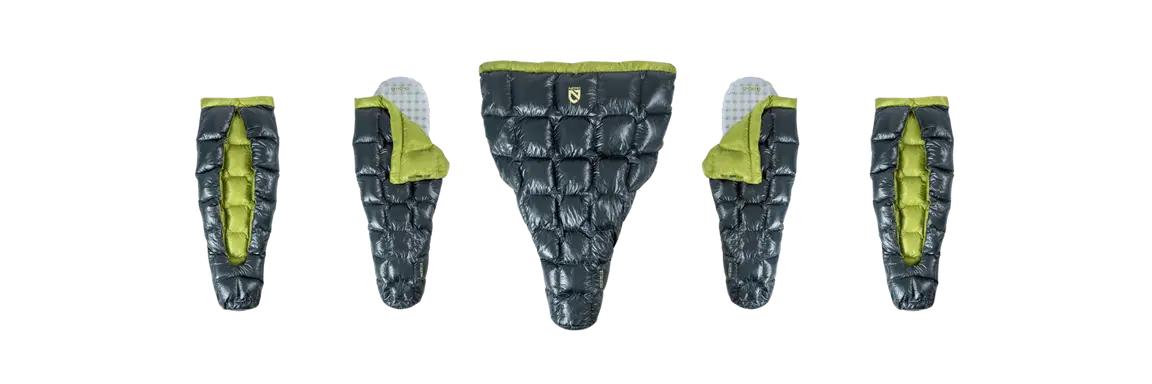
Getting in and out is straightforward. The quilt has a sewn footbox (your feet go in a pocket) and the top drapes over you. There’s a drawstring at the neck to cinch it closed. No zippers to snag, no mummy hood to wrestle with. In practice, this means you can adjust ventilation instantly. Too warm? Stick a leg out. Chilly? Pull the drawstring tighter and tuck the sides under you.
Morning packup is even faster. You stuff it into its sack (no folding required), compress it down, and you’re done. Total time from waking up to quilt packed: under two minutes.
Will You Actually Stay Warm?
Nemo rates the Pulse at 30°F comfort. In real-world thru-hiking conditions, this means different things depending on several factors.
If you’re a warm sleeper using a good insulated pad (R-value of 4 or higher) and wearing a base layer, you’ll likely be comfortable down to the rated 30°F. If you’re a cold sleeper, its typical to add 10 degrees to any rating. So this quilt realistically becomes a 40°F quilt for you.
The draft collar and footbox do a solid job of keeping warm air in. The footbox is fully enclosed, so your feet stay warm without cold spots. The neck area cinches down to prevent heat loss from the top. However, quilts require you to sleep relatively still. If you thrash around at night, you’ll create gaps between your body and the quilt, letting cold air in.
Temperature versatility is a real strength. On warm nights (50°F+), you can leave the quilt loose and use it like a blanket. On cold nights (low 30s), you cinch everything down and tuck the edges under your pad. This adaptability matters when you’re dealing with elevation changes and seasonal temperature swings on a long trail.
The honest truth: if you’re hiking the Pacific Crest Trail in June through September, this quilt handles 90% of nights perfectly. If you’re starting the Appalachian Trail in March (still freezing at elevation), you’ll maybe want something warmer or plan to add clothing layers.
How It Holds Up to Trail Life
The Pulse uses 20D nylon fabric on the shell. This is thin enough to keep weight down but thick enough to survive normal thru-hiking abuse. Will it survive if you drag it across rocks every night? No. Will it handle being stuffed into your pack 150 times and brushed against shelter walls? Yes.
Common durability concerns for quilts include the footbox seams (where your feet push against the fabric) and the pad attachment points (which take regular stress). The Pulse reinforces these areas, and most thru-hikers report these hold up fine.
Cleaning on trail is simple because you won’t really do it. Quilts stay surprisingly clean since they don’t touch the ground. At hostels or during town stops, you can spot-clean any dirty areas with mild soap and water. After your hike, you can wash it at home following the care instructions (gentle cycle, technical detergent, low heat dry or air dry).
The water-resistant treatment on the shell fabric helps with condensation in shelters and light moisture, but this is not a waterproof quilt. If your tent leaks or you’re in a drafty shelter during a storm, moisture can get in. Keep it in a waterproof stuff sack or pack liner.
Packing It Down
The Pulse comes with a storage sack and a stuff sack. The stuff sack is what you’ll use on trail. It’s sized appropriately, you can get the quilt in there without excessive force, and it compresses down to that water-bottle size mentioned earlier.
Compression capability is solid. You’re not going to get this quilt down to the size of a grapefruit (that’s down quilt territory with serious compression), but you will get it small enough that it’s not the limiting factor in your pack size choice.
Here’s a practical tip: compression sacks can damage synthetic insulation over time. The Pulse uses synthetic insulation, which is more forgiving than down but still benefits from not being compressed 24/7. At camp, take it out of the stuff sack and let it loft. This maintains the insulation’s effectiveness and extends the quilt’s lifespan.
Pack integration is mostly about personal preference. Some hikers pack their quilt in the bottom of their pack (keeps weight low, easy to pack). Others strap it to the outside (saves internal space, quicker access). The Pulse’s size and shape work for both approaches.
What You’re Trading
Advantages over sleeping bags:
- Lighter weight (typically 4 to 12 ounces saved)
- Better ventilation on warm nights
- More flexibility in temperature regulation
- Easier to pack (less precise stuffing required)
- Less claustrophobic for people who dislike mummy bags
What you give up:
- Draft protection requires proper technique
- Not ideal for extreme cold without adding layers
- Takes practice to use efficiently (maybe 3 to 5 nights to get comfortable)
- Requires a good sleeping pad (quilts have no insulation underneath)
Who should NOT get this quilt:
- Hikers starting the AT in February or March (too cold)
- People who move constantly while sleeping (drafts will be an issue)
- Anyone who wants the simplicity of a mummy bag (just zip and sleep)
- Cold sleepers who need every bit of warmth (go with the 20°F version or a bag)
The Bottom Line
The Nemo Pulse Quilt costs around $290 to $320 depending on the temperature rating and length. For thru-hiking in spring through fall conditions, this sits in the sweet spot of weight, warmth, and packability.
You should seriously consider this quilt if:
- Your hike is primarily in temperatures above 30°F
- You want to cut weight from your base without spending $500+ on a down quilt
- You have a quality sleeping pad (R-value 4+)
- You’re willing to spend a few nights learning quilt technique
Skip this quilt if:
- You need reliability in freezing temperatures
- You’re a first-time backpacker who wants the simplest option (get a regular sleeping bag for your first few trips)
- You already own a sleeping bag under 28 ounces that you like
The Pulse isn’t revolutionary. It’s a well-designed, properly priced quilt that does exactly what thru-hikers need: keeps you warm enough, packs down small enough, and doesn’t wreck your shoulders with unnecessary weight. For most people hiking most long trails, that’s exactly sufficient.
Make your choice based on your actual hiking conditions, not on what looks cool in gear videos. Check the weather data for your specific trail and dates, know your own sleep temperature preferences, and pick the quilt that matches those realities.